Showing posts with label Writing. Show all posts

Tuesday, December 22, 2015

Die Hard is perfect, part 2


This is a continuation of my post on why Die Hard is such a perfect movie. I suggest starting there.


Dialogue, Character, and Plot


Every line in the movie adds to the film.  Nothing is wasted. And if there is something, I can't see it.  Yes, there's a reason I'm not breaking this up, mainly the dialogue feeds into both the character and the plot ... and because character adds an extra dynamic to this plot.


The first scene alone does so much, it's stupid. Remember, the scene is John McClane talking to the passenger next to him on an airplane.  It gives him a reason to be shoeless during the movie, and establishes his profession, and is already adding to his character by both giving us his CV in a smooth, effortless way. It establishes his anxiety about flying, giving him a cute character trait.  Also, it already shows us just how much of a smartass he can be... McClane's shoeless wardrobe "choice" in the film leads into a brilliant, brilliant moment that deeply hurts him later on.


We've already covered how the Rolex adds to the plot, and that was all covered in three lines of dialogue -- it both underscores Ellis' pursuit of Holly, struts it before John McClane, and dangles this metaphorical gun in front of the audience's face without anyone realizing how integral ANY of it actually is. Ellis, who has few lines in the movie, serves many functions. One, his presence gives a counterpoint to McClane's actions throughout the film -- no matter how many gunman McClane takes out, he's still only one person. Ellis is one of the many realists in this film, but the only one who is among the hostages.


Ellis' strutting egomania, his coke problem, and his focus on Holly all culminates in the pinnacle of his arc. His egomania and his drug problem drive him to try and negotiate with Hans and company -- he thinks he can talk them down, give them what they want, and they can all go home. And while he gives them McClane's name and occupation, Ellis makes it a point to spin the story that he brought McClane to the party, and there is no mention of Holly. For such a minor character, Ellis provides a lot.... even though giving up John's name will eventually lead to Holly.  And his death is one of the few things that hurts McClane.


And that's a secondary character. Maybe even tertiary.


Dialogue establishes a lot in this movie. It establishes Mr. Takagi's character and backstory with Hans' first speech, and adds an emotional blow to Takagi's death.  The offhand lines about needing the FBI, and "it's all part of the plan" feed into the turning point of the film, and a mystery that is on par with any twist by Mission: Impossible, Leverage, or Jeffery Deaver.  In fact, I would say that Deaver was warped by Die Hard.


A lot of things in the second half of this movie are almost perfect mirrors to stuff from the first half.  The conversation between John and Holly in (what I think is) her private bathroom leads directly to a conversation that is the turning point of the film... which is also in a bathroom.  McClane is at his lowest point. He's been wounded physically and emotionally. It's the flip side of the earlier conversation with Holly, and while it's depressing, it has a point, and also accomplishes much.  McClane's relationship with the LAPD Sgt. Powell, outside of the building comes to a head, and it leads directly to the punchline.


Dialogue, and the Little Touches


And there are aspects that are not major, massive plot points, but are little things. It was Michelangelo, I think, who said that trifles make perfection, and that perfection is no trifle.  In the case of Die Hard, it's the small things that add a surprising amount of character to people who serve some very basic functions.


Heck, just look at the character shown in Hans' merry band of killers, and the LAPD, who are most assuredly the most basic part of this endeavor.


For example, look at "Karl."  He's the Bond Villain sidekick of this film.  But the first time we see him is carrying a chain saw, about to cut the phone cables for the building...and he's competing against another gunman, who's trying to either bypass the alarm for the building, or cut the phone system via a more elegant, less brutal fashion, I could never tell.  But you could tell from that scene alone that the two gunman are brothers, and that the death of the younger brother by McClane (the first gunman he kills), drives Karl throughout the film, giving him solid reasons for actions that are detrimental to Hans and his plans.


Then there's the terrorist who sets up shop in a confection stand, bringing out piles upon piles of gun magazines .... and grabs a candy bar.


Then there's Theo, the Hacker. Who gambles, likes sports and sports analogies, and takes his computer job seriously, yet treats everything else with a sense of levity.  He's dour and serious about breaking into the computer and the building's vault, but cracks jokes as he coordinates the gunmen to shoot and blow up a bunch of cops.


And then there's the chauffeur, Argyle, whose presence in the film is almost comic relief -- whether we're laughing at his obliviousness to the situation, or his line to the stuffed animal to "shut up," and even his little victory over Hans' hacker.


Conclusion


Obviously, I can go on forever about this movie (as though I haven't already), but let's face it, it's a good film with lots of little things thrown in that make it a great movie. Notice, there are a whole bunch of things I didn't mention that are also writing moments.


Such as?


Hans and McClane, face to face, giving the audience a much-needed confrontation between hero and enemy... 


Enough C4 to Orbit Arnold Schwarzenegger..."Heinrich had the detonators"... all feed into the finale...


Why Hans is possibly the most quotable movie villain ever. He's cultured, he's educated, he's well dressed, he reads all the "right" magazines, and he's such a cold-blooded, callous murderer...


How Die Hard also has elements of parody, going after both the media and the FBI.


There's a lot here, but this article is almost two thousand words long already. Though I think there's no denying that Die Hard could be used to teach writing classes.


Why Die Hard is the most perfect movie ever: A Writing Blog


I've been meaning to do this for a while now, but Die Hard is a perfect movie.

Seriously, perfect. From almost every angle.  Writing-wise, it's a textbook marvel of how to write. Cinematically, it's perfectly shot. Acting wise, it's pitch perfect.

Let me show you what I mean.  At least writing-wise.  I'm not sure I'm good enough to do this for cinematography, but I may give it a shot later on.  I started writing this expecting to go over everything I mentioned, but I may not be able to.  There's a LOT to cover in one topic alone.  In fact, I'm going to break up this blog into two parts. Maybe three.  Also, there will be a Christmas short story launching today: Deck the Maul.

And obviously, spoiler alert.


Quotable Quotes

We all know that the dialogue is brilliant. If Die Hard is not the most quoted and quotable film out there, it's probably in the top ten list.  Tell me you can't see the exact moment, or fill in the blanks of all of the following...

In German: "Karl, schieß dem Fenster."

".... and father of five."

"Happy Trails _____"

"Boom! Two points!"

"I'm going to count to three. ________ there will not be a four."

"Rumor is that Arafat buys his there."

"What kind of _____ are you?"    "Who said we were ______?"

"No Relation."

"We're going to need some more FBI guys."

"I don't want ______ I want dead."

"HHHHHHHHHHHHAAAAAAAANNNNNNNNNNSSSSSSSSS.  Why'd you have to __________?"

"That man looks ________."  "He's alive. Only John _________"

And, of course, "Yippie Kay Yay, _________"


We all know that.  However, what I mean is how well the Gun in Act One is utilized.  Don't know what I mean? Also called Chekov's Gun.


Chekov's Gun


Basically, if you're going to fire a gun in act three, you show the gun in act one.  Conversely, if you show the gun in act one, you better follow up on it in act three.  It's a basic plot point, and basic setting up said point. You take an item you show early on, and you whip it out as a plot point in the last round.


Agatha Christie did it a lot -- showing you something constantly, and revealing that it's of dire importance to the solution of the mystery.


In the case of Die Hard, small, little things impact the plot all over the place. Everything from the cocaine problems of Gary Ellis to a simple stupid Rolex watch.  Don't believe me?  Let's review a few things.


If you remember the story, NYPD officer John McClane heads over to LA to visit his separated wife Holly for Christmas at her place of business.  Using the computer that runs the building, he has discovered that his wife is going by her maiden name. He also finds that she has a sleezy suitor, Gary Ellis -- Ellis has a bit of a drug problem, and is lusting after Holly. Then terrorists take over the building.


And every single sentence of that paragraph is integral to the plot.


Obviously, the terrorists and McClane heading over to LA are the plot, but everything else feeds into it.


Holly using her maiden name seems like a petty relationship problem, but using her maiden name keeps her alive, even after the terrorists find out who McClane is. In a fit of frustration, early in the film, Holly slams down her family photo ... which is a good thing, because the leader Hans takes over her office, and doesn't realize who she is until the last act.


The fact that the computer runs the building is the only way that the terrorists can take total control over an entire skyscraper.


Ellis' drug problem escalates as the movie goes on, making him take a risky chance with Hans that will cost him his life ... but at the same time, his desire for Holly keeps him from turning her over, and Ellis even makes it a point to stress that he didn't give Holly up. Before the terrorist takeover, Ellis shows off that he gave Holly a Rolex ... which became the second-to-last "gun" fired in the entire movie.  If you remember the film, you might remember that Ellis' watch kills Hans, and saves the day.


If you don't remember how the watch saves the day, that's one thing I'm NOT going to spoil.


To be continued in PART TWO.


Wednesday, August 19, 2015

SFCS -- Strong Female Character Syndrome.


I believe it was Stuart West who told me in private correspondence that he appreciated how many strong female characters I have. I was a little thrown there because it took me a moment to figure out what he was talking about.


In my novels, I have Manana Shushurin, who's a spy that's more James Bond than George Smiley.  She reads, likes music, has a degree from Wittenberg university .... has no social life, and technically, lives with her mother (technically, I say, because she really lives in her office). She also has a secret that's eating a hole in her life.


I also have Maureen McGrail.  She's an Interpol detective, local Dublin cop, relentless, tenacious, and she knows about three martial arts.  She's also pining for a guy who came into her life, swept her off of her feet (just by being himself, really) and disappeared, without showing even a hint of romantic interest in her.


Then there's Wilhelmina Goldberg, who is 4'11", computer nerd, daughter of two esoteric languages nerds. She likes science fiction and fantasy, programs her computer to talk like characters out of Lord of the Rings, and has a subscription to Security magazine.


In context, I should point out that Stuart was using the strong female character comment as a segue into a completely different point, an issue he found in my writing. (Apparently, I shouldn't be putting in bust size as far as describing a female character.  I neglected to tell Stuart that if I knew anything about clothing, I would probably include men's jacket sizes to paint a clearer, more accurate picture of them, too. But I don't know any men who are the sizes I need. Me? OCD?  Nah....)


In any case, the SFC term struck me, and stuck with me.


And then there was this article, entitled I hate Strong Female Characters.  If you read through it, you might find a few points to agree with, and a few problems.


Now, I agree with the author on the initial point.  I also have problems with the SFC label. I really do, because it tends to detract from, oh, the point. In the example they used of Buffy-- she was smart, witty, with outside the box solutions to non-vampire problems (shall we start with the fertilizer bomb in the high school, or the rocket launcher?).  But "Strong" is the only descriptor one can come up with?


In my own work, I spent so much time on developing characters like Manana and Wilhelmina, their quirks and habits and hobbies, that I feel a little awkward if the best description anyone can come up with about them is just "strong."


Though you want my problem with this author?


1)  "I want good complex characters!"


.... And then, let's focus completely on Buffy, because she's the STRONG character.... and ignore Willow, who saves the day repeatedly, but is physically as strong as your average anemic? Faith, who's as physically strong as Buffy, but a broken character? How about Cordelia, who starts out a vacuous California mean girl, and becomes more interesting within the first half of season 1? Anya, who goes through a fairly strange character arc of her own?


And, while they're talking about complex characters, they boiled Buffy down to only "SFC." How about witty? Smart? Creative? The example used in the article was the end point of a two-episode arc exposing just how vulnerable Buffy really is. Yes, she's got superpowers, but she's still a teenager, with all the problems that comes with it, in addition to waging a constant war against everything that came to kill her, swallow the Earth, etc. The author managed to ignore the entire point of a two-part story!


Who demands good complex characters! and then ignores them when s/he gets them?  If this article had said that the "SFC" label shoved a character into a box and left them there, then I could agree to some degree.  But this author seems to be guilty of doing just that.


2) I want a 1:1 ratio of complex characters, male and female! 


The author prattles on about Peggy Carter of Captain America: The First Avenger, complaining that she was unbalanced and cartoonish, making a lot of assumptions.


The author mentions that Peggy Carter shooting Captain America's shield is a temper tantrum that no guy would have gotten away with. Obviously, this person never saw the 100 generic Stupid People Tricks that are on cable, and mostly male.  The author assumed that in firing, Peggy had been too stupid to not be listening to the toymaker Stark prattle on about his cool toys for however long she'd been in his general orbit. The author also assumed that no one in the entire room knew that the shield was bulletproof-- which is kind of like people in Q's lab not knowing to duck on a regular basis.


The author then insists that this "over-the-top" reaction is because she's one of two women with a speaking part, and there be more women on screen to counter stuff like this. (Which is odd, since I counted four -- which included a grandma with a tommy gun, and a SHIELD agent at the end of the film).


My real problem?  First, the author makes these above assumptions and then kvetches that they could have shoe-horned in more women. Why? Just to shoe-horn in more women. So we could have a 1:1 ratio of women in the film. Really?


Hey, maybe we could have put in more cardboard cutouts. Besides, if you really want equality, then Captain America: The First Avenger, was perfectly equal. There were only two complex characters in the whole film.  Tommy Lee Jones was playing....Tommy Lee Jones.... Zola was Mad Scientist #2 ... The Red Skull was Psycho Villain #6 ... Eskine was "Dr. Littleoldmun" from Mel Brooks' High Anxiety. And Stark was very much "Howard Hughes Carbon Copy #1."  Outside of the sidekick Bucky (Plucky Sidekick #9), are any of Captain America's team referred to by name?


In short, Carter and Rodgers were the only two characters of any substance in the film. This isn't a complaint. I'm sure they were plenty deep in character design, but there was little enough of it on the screen. Not to mention-- it's a movie. If you're Peter Jackson, you get nine hours of films for develop all of your character. If you're a Marvel film, you have, at most two hours and thirty minutes.  If you have two well-written and developed characters, you're ahead of the game.  I feel fortunate to have one, some days.


But for the 1:1 ratio this author wants?


Maybe this author would have liked more 2D characters. As she suggest, let's gender swap.... Dr. Zola?  So we can have a weak, simpering little woman be bullied by Tommy Lee Jones? Dr. Erskine? So we can have a little grandmother figure play the martyr?  Hey, we could gender swap Tommy Lee Jones, and have him played by Kathy Bates!  Why not have the Red Skull played by Angelina Jolie?


Now, a reasonable argument I got from Karina Fabian is from the point of view that, there were certainly a heck of a lot more women in the WW2 military than were seen in the film. There were secretaries, WACs, women who transported planes, codebreakers, nurses, etc.  That way, we could have had a lot of women.... but they would have been in the background, and probably would have completely boiled away this author's argument.


3) Women are at the back of the bus...um, movie poster, like Black Widow.


"Strong women are supposed to kick ass and keep their mouth shut." Really?


How about, oh, that Black Widow WAS THE ONLY ONE WHO OUTSMARTED LOKI?  IN THE ENTIRE MOVIE! GAAAHHHH!!!


How about that BLACK WIDOW WAS THE ONLY ONE WHO COULD CLOSE THE PLOT DEVICE DESTROYING NEW YORK?


How about the fact that there were maybe five deep moments in the entire film, and Black Widow was in two of them (The five moments were Stark and Banner in Lab, Stark and Rodgers reconcile, Coulson, interrogating Loki, and Black Widow and Barton, post-brainwashing....six scenes, if you count Black Widow and Bruce Banner in India, giving her half the deep moments in the film).


Oh, hey, how about Sam Jackson? Maybe we should say The Avengers was racist, because he was in the back of the poster?


I'm sorry, but unless you're Iron Man or Thor, you're in the back of this poster.


4) Where's Thor?


Seriously, where's the movie Thor in this discussion?  You know, the movie that was mostly Kat Denning and Natalie Portman handling Chris Hemsworth as he was enduring culture shock? With some occasional exposition from Mr. Skaarsgard? Portman's character, astrophysicist Jane Foster, isn't "strong," in this sense, is she? Because last time I checked, most of my female friends could break her like a toothpick. Foster is instrumental in Thor's change from prick to hero, but is she thrown on the bonfires of the blogger's vanity because she doesn't come with a complete bio and genealogy?


Or does this author consider her merely as a damsel in distress?  Which would be odd, because if you were in the New Mexico town in Thor, you were in distress, up to and including the three beefy supporting characters and the Valkyrie that (quite literally) drop down out of the sky.


Or does this not count, because the end of the movie involves the Warriors Three, Odin, and Loki? Making it three more male characters on screen than women?  Do we count Freya, who tried to stopped three assassins coming to get Odin? Or because she wasn't on screen that often, should we throw her aside?


While not physically strong, I thought Jane Foster was very well written. She was the love interest, sure, but that love motivated both of them to be better.  He was motivated to be a better person, and she was motivated to continue pursuing interstellar/inter-dimensional travel.


Am I wrong? Or, as I asked, does she just not count?


Conclusion: Equality!


As I said at the beginning, I don't like the SFC label.  If you can shove my characters into a nice neat little box, I'm going to be pissy -- either at you for demeaning my characters, or at myself for making them cardboard cutouts.


I would have liked this article more if it were less obvious. It's clearly pushing an agenda -- not about creating good characters, but numerical "equality!" for "equality's" sake. By the end, I felt like I was reading a review of 300 that insisted that there should have been 150 female Spartans at Thermopylae (this is not a joke, I did read one of those).


I honestly couldn't tell you the ratio of my characters if you dared me to.


In A Pius Man, I've got Maureen, Manana and Wilhelmina named above as main characters. Is the ratio 1:1 if I include Giovanni Figlia's wife, the forensic specialist?


Is the ratio no longer 1:1 if I count the three priests in the background?


Is it all right if I have Scott "Mossad" Murphy, who can't shoot, is pale, anemic-looking, and pair him up with the sexy gunslinger Manana?  Does that make him weak, even though he will take gunfire and is a pivotal part of the book?


Does Wilhelmina Goldberg not count if she doesn't shoot anybody, but is a key part to hunting down the bad guys by the end?


At the end of the day, the SFC label is too simple. But so is reducing "equality" to numbers of people on screen and counting lines.  If you're keeping score with 1:1 ratios, exactly what will satisfy you? I have no idea.


Now, if you'll pardon me, I have to go write a scene where Manana has to save Scott. Again.


Tuesday, August 11, 2015

Gun shop visit


Margot St. Aubin.

While I was in Chicago, I was offered a visit to a gun range by fellow Catholic blogger, Margot St. Aubin.  She had read the Pius trilogy thus far and could see that I wasn't exactly up on guns.


And by that I means I've never seen one off of a cop, and never held one. Welcome to New York City. Screw you, Bloomberg.


Anyway....


So, she offered me a range visit while I was in the area.


I walked in to the gun range, and explained the situation. When I said I was I New Yorker, I used the cop line from above.


Off of that visit .... well, one suggestion for writers: First of all, assume that there are no clips. They are magazines. Period. Few guns actually use clips.


Second, I didn't take any pictures because, really, I'm an idiot. Actually, I'm still not used to the concept of my phone as a tool to document every last event in my life.


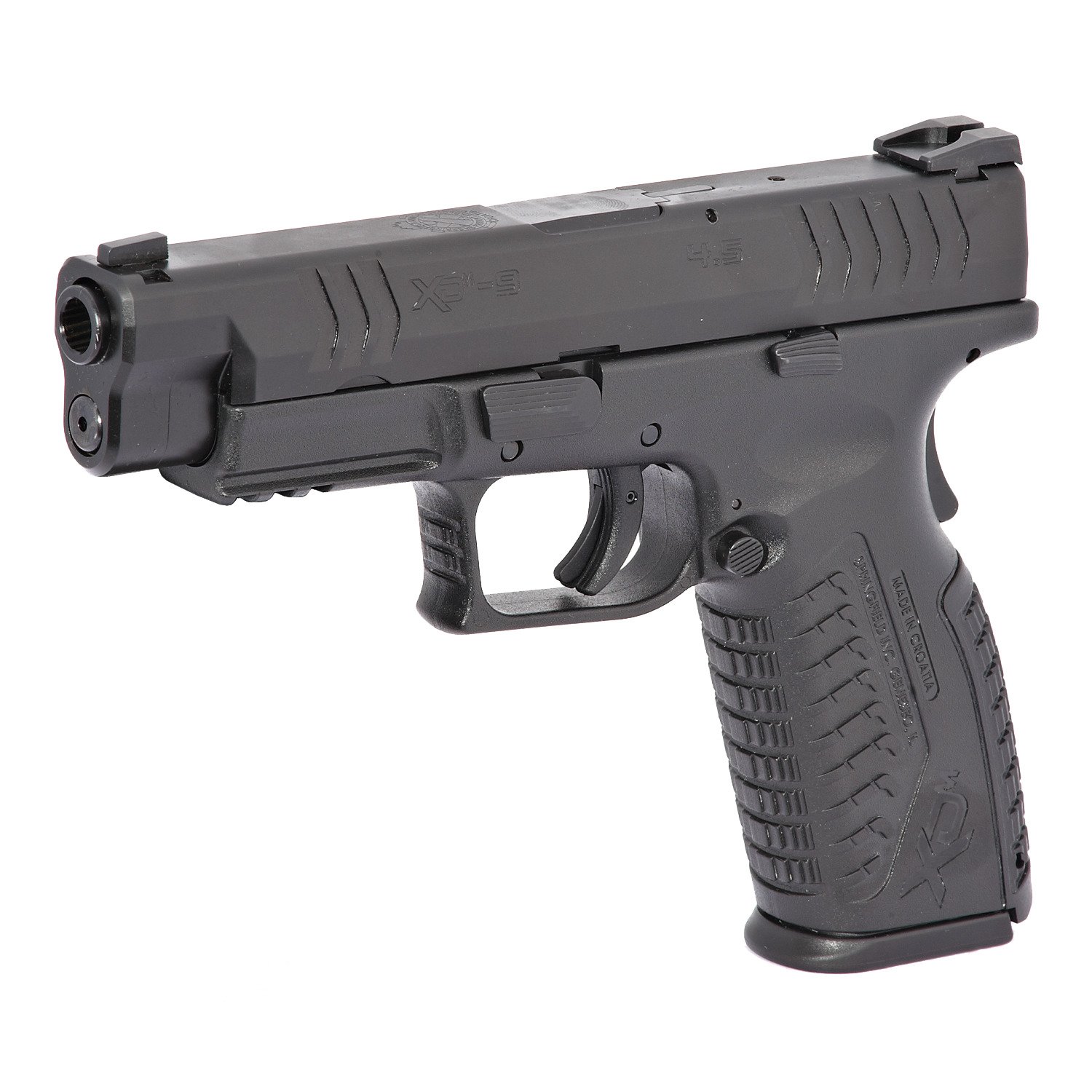
Springfield, XD, 9mm. The model I used at the range

Upon my arrival, the store owner was pleasant. He went over the rules of gun safety, most of which I knew. He then went over the gun's operation, some of which I knew. I never really knew what to do with my thumbs when firing, now I know that they go over one side.


I knew about avoiding slide bite (when gripping the gun, make sure the slide doesn't take off skin between your thumb and forefinger).


Squeeze, don't pull.  I always knew this rule, just didn't really know how to apply it. Even after firing off some rounds, I'm still not 100% I do.


Don't point at anything you don't intend to shoot at / act like it's loaded all the time... again, I picked that up from many, many thrillers where guns come into play.


What I didn't know were the rules of the individual range. I knew that the slide locked back when the gun was empty, though I didn't know there was a little switch? Button? on the side that slid it back into position after it was reloaded, and automatically filling the chamber.


My stance was a simple weaver stance. Feet are diagonal, gun is cupped in both hands, elbows are not locked out ...


Basically, I learned the stance by watching Jack Bauer on 24.


I started out relatively close, only a quarter of the range, then I moved it halfway down range.  I fired 21 rounds, all but 3 landing within the 10 ring (well, I think). When one of the employees saw it, I think the word he used was "fantastic."  Or was that the hotel employee who saw me bringing it inside the hotel?  I'm not sure. There were a few compliments from complete and total strangers.


Either way, we've got photos.


Some observations.


Brass goes EVERYWHERE.  And I mean EVERYWHERE. The casing ejected over my shoulder, around my body, directly onto the floor, bouncing off the stall I was in, rolling as far as 8 feet away, easily.  I understand why not every killer polices their brass. It's hard work. And I was standing still. Imagine if it were a running shootout. Oy.


Firing a gun is a lot easier than I thought. Then again, the Springfield that I was using was very easy to operate.  It's not quite point and click, but it's close.  The grip safety is nothing. It's a button at the back of the pistol grip, just under where it meets the rest of the gun, where the webbing between thumb and index finger wrap around the gun.  From what I can tell, the hardest part was putting the bullets into the magazine. Step one, they broad flat part of the bullet goes into the narrow part of the magazine. The pointy-er bit goes towards the open end.  And after the first ten bullets, the spring inside the magazine starts to fight back.


Damn, that thing's light. As in toy gun light. The gun owner stripped the barrel off for me and let me hold the frame. The frame is comparable with a squirt gun.  The bullets will double the weight. Just over a dozen pill-sized pellets of doom will double the weight. Imagine it. It's strange.


Come to think of it, I think a super soaker, empty, is heavier than an actual gun.  Okay, it's been years since I've even seen a super soaker, but you get the idea.


I always heard that the magazine ejection button was behind the trigger, but it's actually on the side of the gun behind the trigger guard.


After firing, there was no smell that I really picked up on.  None. Seriously, none. There were three other people firing guns in that range at the same time, and I didn't really pick up on any major scent. I expected a smell akin to a fireworks display.  But, apparently, expanded cordite doesn't exist anymore. At all. So, just pretend it doesn't exist. I made reference to it in A Pius Man, but thankfully, I didn't say where the explosive came from, just that it smelled like a fireworks display.  Granted, I said it smelled like Cordite, but I might be able to bluff through if I'm called on it.


There are pink AR-15s. Really. It was strange, because I could ID it by sight, despite the pink. I may have been looking at guns too long.


It's official. Guns are not that scary. Also, I may need to rewrite some scenes in future novels.


Thanks once more to Margot for bringing me along. It was awesome.

Tuesday, August 4, 2015

I'm back! Action / Adventure panel at CWCL


The Catholic Writer's Conference, Live! action-adventure panel.


This will be an incomplete transcript of the entire panel, starring Declan Finn (me), Gene Wolfe, and John Desjarlais (French-Canadian pronunciation. Good luck) and Anthony Kolenc.


Now, there will be gaps here. I've forgotten most of what I've said, to heck with what anyone else said.  I'm going to ask anyone who was there to comment, and fill in the blanks. Anyone who posted to YouTube, please let me know, I'll post some here.


The moderator was the awesome and wonderful Ann Margaret Lewis.


Here we go.....


Q: Has a Saint's non-violence inspired you?


Declan Finn: Well, the closest I've ever come to that was with Thomas Aquinas. Like me, Aquinas was a nerd. He had only two real outbursts in his life.  One was when his family had hired a hooker -- a second one, because he converted the first -- only this one was more persistent in her job. Aquinas finally grabbed a burning log from the fireplace and chased her out, drawing a cross of fire into the door on her way out. I always liked that one if only for the comedy value. The second story was Aquinas at a party being held by King St. Louis. It was one of those "You've been invited. Go to the party, you'll have fun." During the party, he had a philosophical thought, rear up, and slammed the table, declaring "and that will settle the Manichees!" I've got a few characters who are also just as flakey.


Gene Wolfe: But the important part of that fight scene with the hooker -- and it was a fight scene, even if she just ran away -- was what was being defended!


JD: One of my earlier books was about a war that happened over a book. It was written back when I was still a Protestant. Who knew I was writing a Catholic novel?


Worst fight scene ever?

Declan Finn: Jack Higgins wrote a scene to the end of a family of villains who had been plaguing his heroes for books. It was a dark and stormy night, fighting on the roof.  The entire fight consisted of "They went at each other. They fought. They grappled, they rolled to the edge of the roof, and Rashid fell off."  He's been the bad guy for repeated books! I know fights are quick, but can I have a little more detail?


JD: The worst fight scene I've ever read was when a pivotal fight happened off screen, with no emotional payoff.


Q: Who can you give as an example of writing good fight scenes.

Lee Child's Jack Reacher.  Before every fight, there's a little dissertation on violence. It explains why he's targeting who he's targeting, and why he's hitting with what he's hitting.  And since Jack Reacher was 6'5" -- not Tom Cruise -- he was always being confronted by 5-7 people, and discussed group dynamics.


Ann: Do you think they stole that for the Robert Downy Jr. Sherlock Holmes films?


Well, for that, I can at least see Holmes doing it, because he's Holmes. He can play three-dimensional chess in his head.  As for stealing .... does Guy Ritchie even read? I know he was with Madonna for a while, so I wouldn't place money on it.


I also suggest James Rollins.  And for large scale battles, read Bernard Cornwell -- not John, Bernard -- who wrote the Richard Sharpe series. It was about the Napoleonic wars, and one of the few roles where Sean Bean did not die a horrible, horrible death.


[I got a few laughs there]


Q: Why do you write in your genre?

Declan Finn: Because thrillers are what people read. And I'm not going to write a romance novel.


What is your pet peeve about action scenes?


Gene Wolfe: When two guys are exchanging one-liners between punches. All of the one-liners in real life come before the punching starts. One of these days, I want someone to start a one-liner and get punched in the mouth.


[No, I don't remember what I said to that one. It's been a hard week]


Q: For science fiction and fantasy, it's easy to ignore tech or magic in order to have an exciting fight scene. (Remember how Indy shot the swordsman instead of the big scene they had planned.) How do you work around advanced tech that might make a dull fight?


Declan Finn: "I make it simple. I give all the advanced weaponry to the bad guys.  As for working around it -- the tech can be magical, but it's still run by people. People can be tricked. Confused. Or just plain stupid."


Gene mostly answered this question.  I don't remember his answer, though I want to have recalled it.  He also loved the Raiders swordfight cited above because that's very much how real fights go.


Q (from the audience): What makes a Catholic adventure?

JD: As Bilbo said in The Hobbit, "I'm going on an adventure!"  The first part of having an adventure is that you go out."

Me: I'm the simple one here. Catholic adventure? The priests aren't all Nazis. The Pope isn't evil.  There is good. There is evil. And evil must lose.


[I swear I had an "amen" at that point.]


Q (From the audience): "Have you ever had prayer, or angels, or a miracle to solve a problem? Something supernatural for a solution?"

Gene: "Yes, I did. I had one story where every time my main character would start praying, he would start to win."

Declan Finn: "Since I don't want it to be a deus ex machina, I do have a bit of a miracle in book three of my Pius trilogy, when the fecal matter hits the air impeller" [laugh].  "But it's like the old joke: A cop car goes up to a guy's house.  There's a flood coming. Get in the car. Guy says that God'll save me, God'll save my house. The next people to come by are in a boat, and they're talking to the homeowner in the second story window because that's where the water is.  Get in the boat, they say. Guy says that God'll save me, God'll save my house.  The next people to come by are in a helicopter, and the homeowner's on the roof. Guy says No, God'll save me, God'll save my house. Homeowner drowns.  When the homeowner asks, Why didn't you save me? God says 'I sent the cop, I sent the boat, I sent the helicopter, what more do you want?'  It's like that."


Then there were several great lines that I can't remember the context for......


JD: "The scene between Bilbo and Gollum in the cave is a buildup to Bilbo and Smaug later on, playing for much larger stakes. Setup, payoff."


JD: A fight has to either advance the story or the character.  You can't just have it to be there. It has to accomplish something.


[.... I hate him for that. He stole my line before I could say it. :)  Yes, I'm kidding. I love his novels Bleeder and Viper.  I should probably review then ... anyway....]


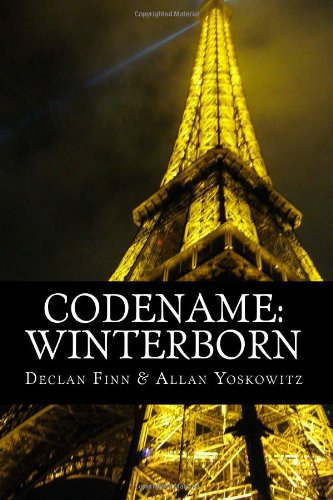
Declan Finn: "As was said by John, if it's going to bore the writer, it's going to bore the audience. I cut a scene from my novel Codename: Winterborn because there were too many fight scenes already.  But since the scene was something that had to happen for the story to move forward, and it was a navy SEAL versus some guys in the street, I boiled it down to a sentence of the aftermath, and moved on."


Gene Wolfe: "I'm glad to see that fighting men are wearing armor again. I had one of the first pieces of armor issued to the army. It was this big heavy nylon thing with lead squares, and it might as well have been made of solid metal. Anyway, during one time, this Lieutenant had come up on stage before the men, and he wore this bright green shining piece of armor with a string of grenades across the chest. It made him look like Flash Gordon. He had a truck of his new armor and he said "Is there anyone here who doesn't have armor?" I disconnected my straps, holding my armor up, and I shot up to the stage, saying "Me. I don't have armor."  And I got myself some shiny new armor, the first time it was given out to the enlisted men and not just officers.  Anyway, we made an about face, and marched out of the room, and there was my old armor, just lying there. The Lieutenant just laughed, picked up the armor, and threw it on the truck."


As I said, these are pieces and parts I recall from less than a week ago. Any help on filling in the blanks would be helpful


Wednesday, July 15, 2015

Jack Bauer, Harry Potter, and the Cassandra effect.

So, what do Jack Bauer and Harry Potter have in common?

No, this is not a joke.

Jack Bauer, the hero of 24, is the key agent on the Counter Terrorism Unit.  He will torture (mostly just interrogation with yelling and threats), kill, fight his superiors, and lop off heads in order to save the day. He developed a drug addiction to go undercover with a cartel, stopped LA from being nuked about three times, saved the President of the United States at least a dozen times, and will occasionally go on revenge-fueld rampages. He is also the winner of going-the-longest-without-sleep-while-still-kicking-ass award.  He's mostly a lone wolf, because everyone who helps him eventually dies.

Harry Potter is essentially experiencing the worst high school experience since Buffy the Vampire Slayer. Instead of being born with martial arts skills and preternatural strength, all he has are the wits of a ten-year-old (to start with) and inborn magical ability that he's still learning to control.  His biggest assets are his friends-- one of whom is smarter than he is. And he's got a death sentence on him since he was born, all because of some Saruman wannabe who has his own Manson family.

So, what do the two of them have in common?

The Cassandra effect.

No, really.

Going through both series, you'll notice that no one actually listens to either Jack Bauer or Harry Potter.  If people listened to Jack Bauer in several seasons, the show would be called 12, not 24.  Every time Harry Potter falls head first into a plot, like some sort of magical Jessica Fletcher, no one over the age of 18 listens to him.  They are both Cassandra, knowing something will happen for certain, only no one will listen to them, especially when they're right. Leaving it up to our heroes to act on their own to save the day, despite the stupidity of others.

Now, granted, it's a plot device specifically designed so it can end with the hero standing alone against all odds, with maybe some cavalry coming over the hill at the last minute. One might say it's a very American concept -- rugged individualism, cowboy duels in the street, the Lone Ranger, every superhero, every Clint Eastwood western-- except that there is still the basic mythology of Odysseus, or Bellerophon, and other folks of yore who have special powers and abilities that make them the only ones to face demons and monsters.  It's the same concept, only we need different reasons for the lone hero to be lone anything.

In the case of comic books, that's easy-- most superheroes have superpowers that enable them to go toe-to-toe with the bad guy and walk away. Even Batman and Iron Man have special toys, special training, and a wealth of experience on their side.

But what happens outside of that? When everyone has the same training? The same knowledge base?

Enter the Cassandra effect.  In both cases, it stems from Konecsni's Law of Committees: to get the IQ of a committee, you take the total IQ of the individual committee members, and then divide it by TWICE the number of members on said committee.  Why? Because people are dumber in groups.

In either case, this holds.  In the Hogwarts School model, the faculty obviously know more than this pissant little child, so how could he possibly have the answer to anything in particular?  In the case of Jack Bauer, the CTU bureaucracy looks something like the bureaucracy of the damned, filled with political operatives who know nothing about kicking ass and taking names, and everything about kissing ass and shuffling papers.  And, in both cases, our heroes can only appeal to an individual --Harry Potter's Dumbledore, or Bauer's President Palmer -- and that person can cut through the red tape that has made everything so very, very screwed up.

If you don't have that, you don't have a plot in either case.

"Oh, Harry? People are going to try and steal this valuable stone we have in the forbidden wing? We'll triple the guard on it. Thank you."

Or...

"Jack, you've got information that says that there were other people behind the terrorist threat? Sure, we'll have an air strike on them in the next five minutes."

Sounds boring, doesn't it?

At the end of the day, individuals who will fight the good fight are always more appealing to us than a massive, faceless bureaucracy. We trust individuals to get things done, but not the byzantine structure of bureaucracies, who will seemingly let anyone in. It doesn't matter if it's the IRS, the State Department, the NSA, CTU, or Hogwarts.  But good fiction uses this plot device well, exaggerating the natural ineptitude of bureaucracies into a plot point -- and sometimes, you don't need that much exaggeration.

Even when you have something like the Magnificent Seven, or the Avengers, it's very much the same concept. It's the individuals coming together to take on a threat that none of them could deal with alone.

Now, one could counter with military fiction... except in that case, fiction makes certain to focus on the officers and high-ranking foot soldiers -- people who have already been promoted because they have special abilities and knowledge that put them at the head of the back. Just look at 300-- we focus on, possibly, six of three hundred Spartans. It's hard to make us emotionally invested in 300 individual soldiers in the time and space allotted, but making us invested in a select few allows us to be invested in all of them.

At the end of the day, we the audience become invested in individuals.  The Cassandra effect -- or the committee effect -- gives writers the excuse to focus on a select few in a modern age where great big monolithic installations are supposed to take care of everything.

Monday, July 13, 2015

Ten Rules I want Writers to follow


I was recently asked what rules, as I reader, I wish writers would follow. I came up with a few.


Rule #1: Don't preach at me. Tell the damn story... I think this is self explanatory.


Rule #2: Don't make up your own history, claim that you've done your research, and then NOT share your research. You are not Dan Brown, I don't tolerate it FROM Dan Brown, and I will waterboard the next schmuck who does that. Anyone want to test that threat? I'm a freaking historian. I know when you're lying you morons!!!!!


Rule #3: If you have an action sequence, HAVE an action sequence. I don't need blow-by-blow, but if your concept of a "fight" is "they fell to the roof and struggled with each other until they fell off," I will hurt you. Jack Higgins did that, and after that, I knew Sean Dillion series was doomed. I was writing like that when I was 16.


Rule #4: If you have a chapter, it has to be more than a paragraph long. If you only have snippets from a mad serial killer, we might forgive you if it's a handful of chapters. If it's your entire novel, you should be beaten to death with the hard copy.... I'm looking at you, James Patterson.


Rule #5: Vampires only sparkle IF THEY'RE ON FIRE.


Rule #6: Fantasy authors, please, for the love of God, if you're going to have a system of magic set in a modern environment, please explain where magic comes from. [Ahem: Dear Madam Rowling, where do wizards get their powers FROM? Why do they actually need wands? Why can some spells not require any wands?  A paragraph over your 7 novels would have been fine to explain any of this]


Rule #7: Stop giving me stupid villains. Just stop. Please.

Rule #7b: Stop giving me insipid heroes. Just ... don't.

Rule #7c: In fact, Stephen King, just stop writing entirely.


Rule #8: While we're at it, SOMEONE HAVE AN ORIGINAL IDEA. I don't care if you've been a bestseller for 20 years, stop pumping out books like they're an obligation. I'm looking at you King ... Higgins ... Patterson ... Pat Cornwell ... Nora Roberts does consistently better and original ideas than you twits, and she's a ROMANCE NOVELIST.  Gah.


Rule #9: Stop with the utterly dark nonsense. I'm tired of the same dystopian universes, the same miserable outlooks on humanity, and the same anti-heroes. Snake Plisskin only works once. Twice if you make him into a Metal Gear character. After that I'M BORED. You can give me an anti-hero if he's well-developed, likable, smart. You can stop giving me the same depressing, dark, amoral character who actually HAS no character development.  Even the book Codename: Winterborn, which has been compared to Escape from New York, went out of its way to describe how society works, how people life, how there's an economy. I never want to see another Escape from New York or Terminator universe unless they're in Escape from New York or the Terminator universe


Rule #10: Stop, stop STOP making professional soldiers into sociopathic Redshirt canon fodder while the plucky hero WITH ZERO COMBAT EXPERIENCE gets out alive.  Thank you


Thursday, July 2, 2015

Cover Art, Graphics, and Slowly Going Blind.


Sorry for not posting on Wednesday, I was busy blinding myself.


No, I'm not kidding.


So, you know that It Was Only On Stun! will be self published. And, I gotta tell you, I didn't particularly like everything that was offered to me, in terms of cover options at the self publishing places I'm looking at -- Amazon.com, and Lulu.com.


So, I decided to try it myself.


I know, I know. You're thinking, "John -- or is it Declan now? -- we've seen your artwork.  Your Vatican ninjas were a bit of a joke. Why do this to yourself again?"


Well, because I'm stubborn, and because this should have been simple.


Let's start with what I showed you already.


Now, this photo on the right is what I originally had up.  There are a few problems with it.  The quality isn't that good when you look at it up close, the blood spatter on the badge isn't that good, and the "Junior" has become unneccessary.


"Junior" by the way, is because my father had his own company called "Declan Finn Associates," a little side gig for resume building and interview preparation.  Anyway, that's where the Junior came from.


Then my father said I could drop the Junior.


Did I mention that I love him dearly?


Anyway, so there was that.


So, what's the next step, you ask?  Well, there had been an option on Amazon.com that gave you a banner-type display for your title and author name.  It looked kind of nice, actually. Also, someone suggested that they liked one of the earlier "flair button" image that said, "Good Morning, I see the Assassins have failed."


And, so, I started to build that with the Amazon cover generator.


Unfortunately, it didn't want to work for me.  The image I had was always getting cut off from the cover layout that Amazon had. It was a pain in the ass.


So, I built that myself.  While it looks nice, can you see the problem?


It now looks like I have two titles to the book.


Oh joy.  Shoot me now.


So, once again, back to the drawing board.


I knew I had to go back to the original thoughts on the matter. I knew the assassins comment had to go. The blood covered badge seemed to offend no one, and it's part of the convention, called C-Con in the book.


So, that's good, right? Perfect?  I copied a "Hello, my name is" badge from offline, then slapped it on, morphing it a little, and presto, done.


Not quite.  You see, Amazon's cover creator requires 300 pixels per inch. I had 96 PPI.


AAAAAARRRRRGGGGHHHHH!!!!


Ahem.  Anyway.  So, back to the drawing board.


So, I had to go back to the beginning on the badge.  The image I had stolen from online hadn't been that high definition to start with, and I didn't like the blood spatter.


I made my own badge, from scratch, and tinkered with some blood spatter online. I had to adjust it later, in the image itself later on, but aside from that, it seemed to work.


After that, it was easy.  Start with red background.  Add black circle, white letters, past the badge over it, and we're done.


Then what do we do with the author name?  Simple white lettering?  Black on red?  Orange on red?  Seriously, what would make it easily distinguished from everything else? What would be bright enough to leap out and grab someone's attention if this were on a screen, or a bookshelf?


Enter Clive Cussler.  He's been an author I've read since I was a kid.  His Dirk Pitt novels were very much straightforward adventure stories, and he's been a bestselling author since, well, forever.  I remember he once mentioned how he was in advertising and insisted on four-color covers, so that it would be eye-catching.


So, I cheated.


Do you see something somewhat similar between the Flood Tide cover, and mine for It Was Only On Stun!  


I literally took the color from the title graphics, and used it to ink my own title.


And then there was the back cover, which I had to jury rig multiple times because I had to put text in with margins I couldn't see, and I had to account for a bar code I didn't have yet.


Not to mention, I hated the lower cases in the author name.


So, then it ended up like this.


And then there was the author picture.  A friend of mine told me I had a great Facebook photo, but it wasn't professional.  So, I had to fix that with freeware called Photofiltre.


So, at the end of the day, what does the full cover look like?


It looks something like this.


So, what do you all think? Good? Bad? Indifferent? Leave a comment below, and tell me what your opinion is.


We're getting close, people. Almost there.... We're so close, the next blog entry is number 300. I want to hold off until next week. I hope to have an announcement then.


What announcement? Well, the title I want is "Forget Sparta: I! AM! PUBLIIIIIIISHED!"


Let's see if Amazon can keep up with my ambition.


So, until next week, all.

Wednesday, June 24, 2015

A villain versus an antagonist


An antagonist is an opponent, but a villain must be stopped.

I'm going to be a little nerdy here and use some rather clear-cut and obvious examples of a villain vs an antagonist, using enemies of Batman....

Yes, I know ... Batman? Really?  Yes, really.  Why? Because everyone at least knows of the majority of the Batman rogue's gallery, so it acts as a good common denominator for everyone involved.

Let's look at some of these folks ...


Few people would think of the Joker as anything less than a villain.  And that would be correct -- but what makes him so?  A complete and utter disregard for human life, for one.  He thinks he's funny when he kills large groups of people, and not only that, but he insists that everyone else finds it funny too.

Is Joker insane? Perhaps -- his fashion sense would indicate that if nothing else -- but does that make him not-evil?  It reminds me of the argument that some victims of child abuse go on to become abusers themselves -- which is garbage. I know more victims of child abuse than is possibly good for me, and while they have an array of neuroses and psychoses, none of them have gone on to be abusers themselves.

Even Alan Moore's The Killing Joke insists that Joker is the result of, as he put it, "one very bad day."  But, even during that comic, Joker is undermined by his victims. Despite creating a very bad day for police Commissioner Jim Gordon, Gordon stays completely sane, and doesn't go off on a killing spree.  He doesn't even put two into Joker's head, which would have been at least justifiable under the heading of "We shoot rabid dogs, don't we?"

The legal definition of insanity is the inability to know the difference between right and wrong. With the Joker, the number of times he theorizes on what he should do next illustrates he's fully well-aware of the difference, he just finds "wrong" a more entertaining option. On the sociopath /sadist scale, he gets a ten.

He might be clinically "insane," but he is also evil. Let's call this a villain.  He's not merely the opposition, not put there by circumstances -- he's like this because he wants to be.


The Riddler is also of the same bent as the Joker.  The Riddler's basic compulsion is to try to prove himself smarter than Batman. That's it. To that end, he plans crimes and leaves clues behind. This looks quite insane ...  Except when you take into account an incident where Riddler is beaten to within half and inch of his life.  He's put into a coma for months, and when he comes out of it, he has both long-term memory loss and a new idea-- he would outsmart Batman by being an even greater Detective!

In short, when Riddler has been on the wrong side of the law, he has chosen to be this way. And his choice makes him a bad guy. Wikipedia has actually described him as being a malignant narcissist ... which we used to call evil.  He's evil and he's having fun. Villain.

In short, "Proving that I'm a super genius is more important than anyone's life," means you're an evil little bastard.

You can see where I'm going with this. At the end of the day, villains are simply evil. But what's an antagonist?


On the other side of the coin (yes, pun), you have former district attorney Harvey Dent, now the criminal known as Two-Face.  In the comic books, Two-Face is a multiple personality, and he is literally not in control of himself; his darker impulses have created an entirely different person, and he requires a coin toss in order to judge how that would work. In Freudian terms, Two-Face is split into Id and Superego, with nothing to moderate between the two except for a coin.  He's just plain old insane.

For instance: during the No Man's Land storyline, Two-Face kidnaps  police commissioner Gordon and puts him "on trial" for breaking a deal. However, Gordon is saved by a vigorous defense by .... Harvey Dent.


I think this puts him on the straight crazy bent (yes, pun).  There's good in him, it's just kinda lost in the white noise that's his brain. Antagonist.


And now for something a little different.

Catwoman is a thief. But she's also been our thief. She robs from the rich, gives to herself, and does the occasional side job for the US government and the CIA. Her later development has put her as more of an anti-hero than even an antagonist.

Though she still occasionally seems to play cat and die Fledermaus, there's still more than enough good in her to proclaim her an antagonist -- when, as, and if she isn't off saving complete strangers because they happen to be within her line of sight when they're in trouble.

And then there's Ivy.


Cosplay Deviants, DragonCon, 2012
Poison Ivy, formerly Pamela Isley, is a nutjob. Completely and totally broken in the head. She has a concept of right and wrong, she just puts plants over people.  Normally, her position as the ultimate eco-terrorist would be something to classify her as just plain evil. After all, she has made this decision, and she has decided that her will is greater than everyone else's moral code.

However, there's a bit of a problem with that. Why, you ask? Because Poison Ivy has had moments where she's protected human beings, despite that she generally thinks humans are inferior to plants. The No Man's Land storyline had her protecting orphaned children in central park and feeding members of the city. She has the occasional breakdown, but she's trying to be a good person. Which is more than I can say for some people I've known in real life.

And, besides, if you turn into vegetable matter and plants talk to you, you'd be a little screwed up in the head as well.

I guess I could go into Harley Quinn, or the Penguin, but I think we'd be beating a dead horse at this point.  Harley is now an anti-hero after years of being a poster girl for battered woman syndrome as Joker's girlfriend.  The Penguin has retired to being a white collar criminal who runs his own lounge.  Bane can't be classified, because his character radically changes depending on who's writing him.

At the end of the day, I never subscribed to the cliche that villains never look in the mirror and see a villain. Or that "they think they're right." Villains don't care about right or wrong.  They just care about themselves. An antagonist might be talked down, or persuaded, or brought away from the dark side; there is the possibility of redemption. The villain likes the dark side, has chosen it, and never wants to leave. It's the difference between Hannibal Lecter (of the books) and Sauron. It's the difference between Joker and Two-Face.  It's the difference between Heaven and Hell.

At the end of the day, it's why I prefer villains in my novels. When I have an antagonist, I tend to redeem them.... eventually.

And trust me, in A Pius Man, there's an opportunity or two for redemption for some. And others just want to die screaming. 

Wednesday, June 10, 2015

Vlog: reviewing Dan Brown.


You've probably read my review of the Da Vinci Code, if you're a long time fan of the blog. If you're not, well, this will be entirely new to you. There's additional content at the end, by the way. Just for fun.


Saturday, June 6, 2015

Spoiler Alert for ... a video game? Halo.


Some people may have noticed that I'm a little wierd. I'm also a bit of a nerd, as my DragonCon reports and my JMS blog of today might tell you.


However, I want to discuss a little bit about one of the most epic bits of science fiction storytelling I've seen outside of Baen publishing.


The Halo video game franchise.


Yup. Video games can have epic writing.


If most of you are thinking "Thanks. We've seen Super Mario Brothers, there is no writing," I respectfully suggest you get your head out of the 80s. And parts of the 90s.


I've only recently been brought back into the world of video games by my friend Jason. He started by giving me a video game called Halo. It was a "first person shooter," which I always figured was short for "a game with no plot, but you get to shoot up anyhthing that gets in your way, or blow them up if you have grenades."


Then I started playing it.


It had a story. It had supporting characters with personalities. It had witty chapter titles and sarcastic one-liners. It was a space-sprawling epic played out on something that resembled Larry Niven's Ringworld -- an artificially designed planet called Halo.


The premise was simple enough: alien jihadists called the Covenant have discovered humans, and they really, really don't like us. The game starts with the player's ship on the run from an alien armada, and runs into Halo, a world that turns out to be a sacred artifact to the jihadists. The player's character is a bioengineered super soldier called a Spartan-II, and wears a Mjolnir battle suit (yes, it's named after the hammer of Thor). The humans get the bright idea to take over Halo before the Covenant do -- this artificial ring world is a moon-sized weapon, after all.


And then, the humans wake something up. Not quite an eldritch horror from beyond time and space, but good enough for government work. Let's just say that they're called The Flood and leave it there. They have a tendency to devour, well, everything.


After waking up said horror, another side to this little war comes up. The artificial intelligence of the Halo ring discovers that, "Hmm, the Flood creatures have been let loose. We have to stop them."


It turns out that the eldritch horror isn't from beyond time and space, but from one hundred million years ago. The Halo rings were built to stop them. But, the people fighting the flood back then decided to hold on to a few samples for research, and so the species wouldn't die out (I always knew rabid environmentalists would be the ruin of us).


All goes perfectly well until the player discovers how the Halo rings kill the flood-- by erradicating all life bigger than a microbe. The flood starve. End of problem. When the Spartan-II and his sidekick object to this plan, the AI that has been chattering at you for a whole level of the game turns nasty.


Did I mention that the AI is insane?


Soon, the game becomes a four-sided battle. Alien jihadists are still trying to kill you. The flood are trying to kill everyone. And the AI that you've pissed off has his own army of flying, laser-wielding drones who are also out to kill you, the flood, the jihadists, and everything else in its way.


And that's just the first game.


The Halo universe is so dense in background and in story, they've written at least half a dozen novels worth of material, and they're making more.  Comic book and Star Trek favorite Peter David has written a comic book volume from the Halo-verse, as has William C. Dietz, another author with his own writing credits -- though the first author to be offered the job was Timothy Zahn.


SPOILER ALERT.


There might be one or two people upset by the end of Halo 3.  The third game sought to wipe out the Flood, end the war with the alien jihadists, and  finally end the threat of the Halo rings.   By and large, they succeeded.


However, the character you play, the Spartan-II, is last seen drifting in space in half a starship -- bad things happen when a wormhole closes and the ship is only halfway through it.

Since Halo 3, several Halo games have been released -- prequels, side-stories, and tales that never answered the simple question: Whatever happened to Master Chief, Spartan 117


Halo Fans will be happy to know that the trail for Halo 4 starts where Halo 3 leaves off.


Tuesday, March 24, 2015

"Manly men with brains" masculinity and writing.


In a writing context, what exactly
defines being “manly”? Really, I’m starting to wonder. It’s
a word that’s been tossed around a lot lately: Cedar Sanderson and Sarah Hoyt talked of emasculating women in their SFWA posts, a
writer’s group I’m a part of recently lamented the death of the
“manly male” characters like Dirt Pitt in popular novels. Even A
Pius Man
in a review by Robert Bertrand referred to it as “a
book for manly men with brains,” though on the other hand, I've
been praised for my strong female characters, both in private and in public. Both were aliens concepts to me, namely
because I never considered either while I wrote it, the characters
weren't “strong women” or “manly men,” the
characters just … were.


Then again, let’s face it, William
Shakespeare would probably fail a course on his own plays,
considering what people have seen in his own work that he, in all
honesty, probably hadn’t seen himself when he wrote it.


Now, I'm going to presume that the common definition of masculinity will involve men who can beat the crap out of other people. However, physical prowess isn't exactly exclusive to men anymore.


Manliness also includes a willingness to draw a line, hold it, and be willing to defend it, and fight back.  Also not exclusive to men, but few men have ever been pushed around and been considered "manly."  Then again, the ultimate Man, Jesus, did instruct us to go the extra mile when someone's walking all over us, but a "manly male" could take that and make it into "You want to shanghai me into carrying your stuff for a mile? I'll do it for two. Hah, you wuss."


So, two down.  Next would be to discuss men on an emotional level: what to express, how to express them, that sort of thing.


And, since
I mentioned the Bard, Shakespeare has also had some thoughts on
manliness, particularly in MacBeth. After MacDuff is informed
that his family has been slaughtered, he is told to take it like a
man; MacDuff replies that he must also “feel it as a man.” So, I
guess a man actually can be "in touch with his feelings" – feelings
of loss, of love, of filial devotion, as well as rage and homicidal intent.


Recently, my own character was commented on, that I’m a “cool and detached” person. That could be, but
that’s only because I've noted that feelings have to be beaten,
forged, and molded into a proper tool; hot, passionate feelings just
turn into shrapnel, unfocused and wasteful. I like to think I have a
good lock on my passions. I love truth so much, I made a trilogy
dedicated to defending it, and beating back lies about a man who died
before most of my friends and readers were born. Being detached
keeps those passions controlled.


Heck, Jesus has called us to love one
another, not like each other. Which is good for me, because I
can’t stand most people, but will rush to their aid if they truly
needed it (and you thought I was schizophrenic because I’m a writer, didn't you?). Most people who trip over me have
conversations that are so self-centered, I can just smile and nod and
get away with it.


Don’t get me wrong, I used to care
about everything that everyone would tell me. I’d do my best to give
advice and council, and I’d hurt when they’d hurt and fret when
they did … then I concluded that they just wanted attention, and
someone to tell them that they were right and they were perfectly
justified to do whatever it was they wished. Now, I will only invest
myself in a select few.


And let’s face it, you've all seen
me when I become invested in a person. When my best friend (who I
was a bit in love with) burned me, I had a full-on public nervous breakdown, disguised as a writing lessons: emotions varied from painto rage to murder to tears.


So, which is “manly”? The
passionate rage? The hurt? The tears? All of them?  None of them? No idea. My men in The Pius
Trilogy
are hurt, get sad, depressed, enraged, and homicidal.


Even in the Facebook conversation that
started this discussion mourned for a manly character who fights,
gets laid, saves the girl, smokes, drinks, but is also educated.
Really? Does that mean James Bond, perfect psychopath, counts?
Spider Robinson once noted Robert Mitchum as a perfect example, but I
never saw the man as more than a moving block of wood. Neither of
them are the sort of man you find in Inigo Montoya of The Princess
Bride.


Manly? Or too much

leather?

Looking at all of the “manly”
characters I can think of, the best I can come up with is being
vaguely detached. At least the ability to be detached. Looking at
men who are manly without being He-Man exaggerated, what is
there: Bond, Montoya, Batman, Tony Stark, all exude “I don’t give
f---,” either about the opinions of others, law (occasionally
morals). Captain America, Thor, Superman, all stand for something,
defying what others think or feel. They are in touch with their own
feelings – honor, patriotism, ethics.


No, I don’t necessarily mean
Alpha dominant bull, because that just seems to lead to macho
stupidity or being a schmuck. But to have the correct level of
self-possessed spirit that says “Yes, I can act independently if
abandoned.” Sure, a manly fellow can fit in with society, any Band
of Brothers sentiment relies on it, but he is not attached at the hip
to society write large.


But all things in balance, please.
Even “sociopaths” who kill in the military can feel the loss of a
friend, feel sad over the loss of a civilian, et al. They love who
they love, and if you mess with them or theirs ... well, let's just say that they don’t
love you. James Bond shows an unnatural level of detachment, caring
about … nothing, really. At the end of the day, attempts to give
James Bond depth fail because he only cares about his job – not any
woman he sleeps with, and his sense of patriotism only seems to go
only as deep as it is his job to defend the country. If one day,
someone ever writes a book where Bond’s failure leads to mass
casualties, his biggest response will be to shrug and treat it like
an unsuccessful chess match.


So, does being a man entail sociopathy?
Well, let’s break that down a bit. In John Ringo’s Under a
Graveyard Sky,
two men say that they’re sociopaths because
killing doesn't bother them, and they don’t see the enemy as
people. I don’t find that too strange, since if I’m being shot
at, I’d see the threat, not a person. Little definitions like this
lead some people to say that a sociopath is defined as someone who
merely scares the psychologist. And now that sociopaths come in
flavors (high/low-functioning, genetic, situational), sure, maybe
being a man does involve that on some level, the same way that Autism
Spectrum Disorder has been expanded to cover people who were once
merely assholes.


Sherlock, with Benedict
Cumberbach, is frequently described as a “high-functioning
sociopath,” but is not usually considered manly because he’s so
detached, he borders on being a thinking machine, as was the
original. Yet Martin Freeman’s Watson, in the first episode,
shoots a serial killer with no remorse, and it didn't faze him one
little bit. Psychology has gotten to the point where many would see
Watson as a sociopath, so let’s not get too carried away
with that, shall with?


Heck, Kevin Anderson, the hero of my co-authored novel Codename: Winterborn, has a lot of similar characteristics to all of these "manly" qualities mentioned: rage, love, filial devotion, will stand up for what he believes in, up to and including killing people, will let no one push him around unless he wants to be pushed around ... and one review (who gave it 5-stars) slapped a label on Kevin as a simple psycho.


Is he crazed and damaged in Codename: Winterborn?  Oh, you betcha.  But just calling him a psycho because he has no problem killing people might simplify things just a little too much. Heck, he had no problem killing people before the book started.


At the end of the day, for a literary
character to be manly, yes, he can have feelings – in fact, he must
– but he must also have the right ones, and in the proper degree,
otherwise, he becomes a caricature.