Showing posts with label guns. Show all posts

Tuesday, August 11, 2015

Gun shop visit


Margot St. Aubin.

While I was in Chicago, I was offered a visit to a gun range by fellow Catholic blogger, Margot St. Aubin.  She had read the Pius trilogy thus far and could see that I wasn't exactly up on guns.


And by that I means I've never seen one off of a cop, and never held one. Welcome to New York City. Screw you, Bloomberg.


Anyway....


So, she offered me a range visit while I was in the area.


I walked in to the gun range, and explained the situation. When I said I was I New Yorker, I used the cop line from above.


Off of that visit .... well, one suggestion for writers: First of all, assume that there are no clips. They are magazines. Period. Few guns actually use clips.


Second, I didn't take any pictures because, really, I'm an idiot. Actually, I'm still not used to the concept of my phone as a tool to document every last event in my life.
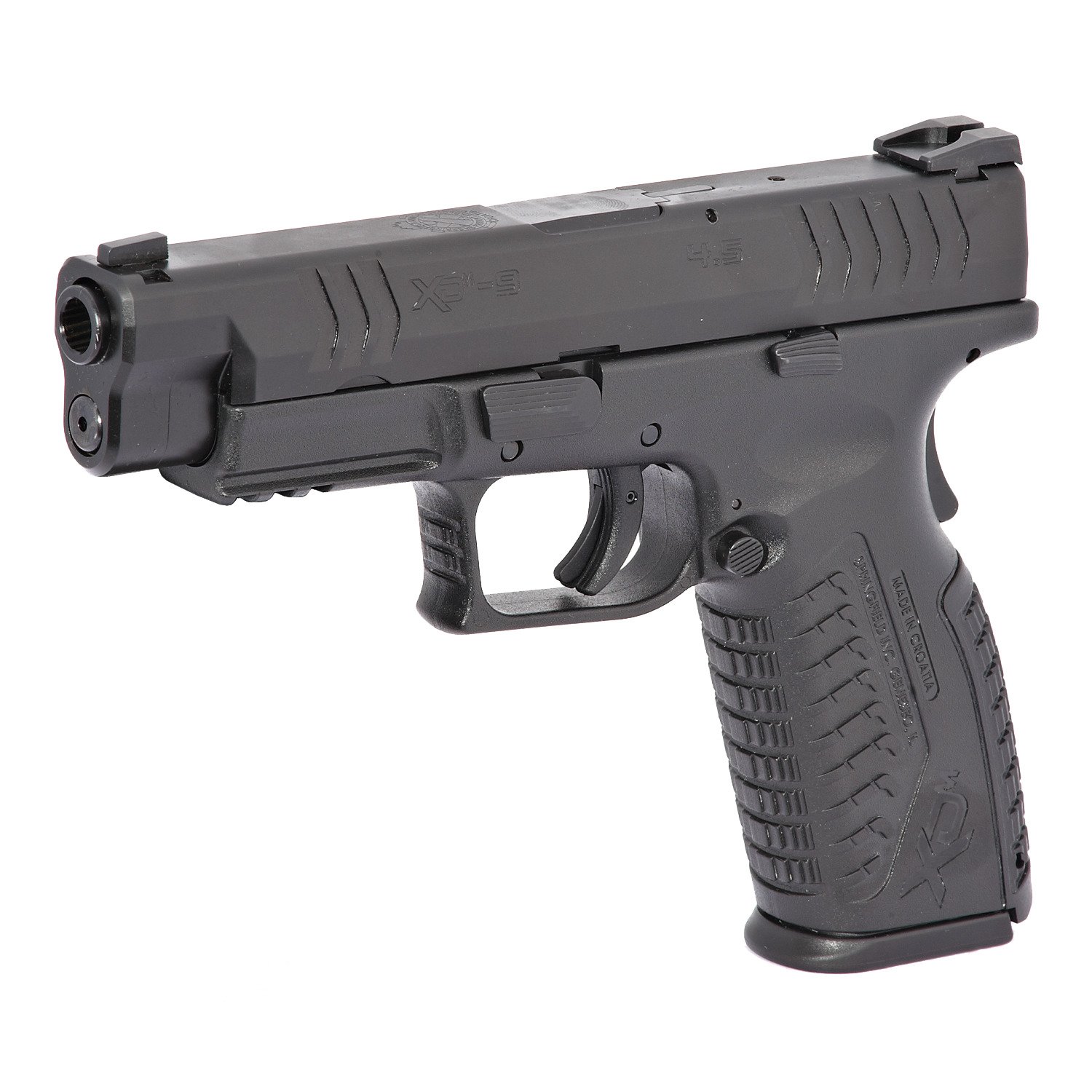


Springfield, XD, 9mm. The model I used at the range

Upon my arrival, the store owner was pleasant. He went over the rules of gun safety, most of which I knew. He then went over the gun's operation, some of which I knew. I never really knew what to do with my thumbs when firing, now I know that they go over one side.


I knew about avoiding slide bite (when gripping the gun, make sure the slide doesn't take off skin between your thumb and forefinger).


Squeeze, don't pull.  I always knew this rule, just didn't really know how to apply it. Even after firing off some rounds, I'm still not 100% I do.


Don't point at anything you don't intend to shoot at / act like it's loaded all the time... again, I picked that up from many, many thrillers where guns come into play.


What I didn't know were the rules of the individual range. I knew that the slide locked back when the gun was empty, though I didn't know there was a little switch? Button? on the side that slid it back into position after it was reloaded, and automatically filling the chamber.


My stance was a simple weaver stance. Feet are diagonal, gun is cupped in both hands, elbows are not locked out ...


Basically, I learned the stance by watching Jack Bauer on 24.


I started out relatively close, only a quarter of the range, then I moved it halfway down range.  I fired 21 rounds, all but 3 landing within the 10 ring (well, I think). When one of the employees saw it, I think the word he used was "fantastic."  Or was that the hotel employee who saw me bringing it inside the hotel?  I'm not sure. There were a few compliments from complete and total strangers.


Either way, we've got photos.


Some observations.


Brass goes EVERYWHERE.  And I mean EVERYWHERE. The casing ejected over my shoulder, around my body, directly onto the floor, bouncing off the stall I was in, rolling as far as 8 feet away, easily.  I understand why not every killer polices their brass. It's hard work. And I was standing still. Imagine if it were a running shootout. Oy.


Firing a gun is a lot easier than I thought. Then again, the Springfield that I was using was very easy to operate.  It's not quite point and click, but it's close.  The grip safety is nothing. It's a button at the back of the pistol grip, just under where it meets the rest of the gun, where the webbing between thumb and index finger wrap around the gun.  From what I can tell, the hardest part was putting the bullets into the magazine. Step one, they broad flat part of the bullet goes into the narrow part of the magazine. The pointy-er bit goes towards the open end.  And after the first ten bullets, the spring inside the magazine starts to fight back.


Damn, that thing's light. As in toy gun light. The gun owner stripped the barrel off for me and let me hold the frame. The frame is comparable with a squirt gun.  The bullets will double the weight. Just over a dozen pill-sized pellets of doom will double the weight. Imagine it. It's strange.


Come to think of it, I think a super soaker, empty, is heavier than an actual gun.  Okay, it's been years since I've even seen a super soaker, but you get the idea.


I always heard that the magazine ejection button was behind the trigger, but it's actually on the side of the gun behind the trigger guard.


After firing, there was no smell that I really picked up on.  None. Seriously, none. There were three other people firing guns in that range at the same time, and I didn't really pick up on any major scent. I expected a smell akin to a fireworks display.  But, apparently, expanded cordite doesn't exist anymore. At all. So, just pretend it doesn't exist. I made reference to it in A Pius Man, but thankfully, I didn't say where the explosive came from, just that it smelled like a fireworks display.  Granted, I said it smelled like Cordite, but I might be able to bluff through if I'm called on it.


There are pink AR-15s. Really. It was strange, because I could ID it by sight, despite the pink. I may have been looking at guns too long.


It's official. Guns are not that scary. Also, I may need to rewrite some scenes in future novels.


Thanks once more to Margot for bringing me along. It was awesome.

Wednesday, May 15, 2013

Guns, Sandy Hook, and political parasites.


I am not going to discuss the Connecticut shooting. The day of the shooting, Facebook was filled with so many left-wing anti-gun @$$h0l3s trying to politicize dead children that I had to point out that the bodies were not even room temperature yet, and the political parasites were trying to stand on their still steaming bodies.


There was even someone on Facebook within six hours who stated that,  yes, he would have rather that the children has had all been set on fire, because at least then they wouldn't have been shot.  He said that. I cannot make this crap up.


Do you want to know what's worse than killing children?  People trying to make political points off of their dead bodies. These people make me violently ill.


And the worst thing?  There are already people making excuses for this murdering psycho -- "bright," or "autistic" or "Aspergers," and other exculpatory or complimentary words are being thrown at us to excuse mass murder, as though blaming the guns for the slaughter.  Again while at the same time defaming innocent civilians, painting 94 million American gun owners with the same brush of mass murder.


People make me ill. And I've made myself sick just writing about this. Notice, I haven't said one thing about the shooting itself, just the aftermath.


The people of ancient Carthage were a money-worshiping people. To sacrifice to their god, they would toss the biggest drain on their pocketbooks into a fire. They would throw in their children.


If you were someone who spent time online on Friday talking about monsters who own guns instead of passing along prayers, then look in the mirror. You already threw the baby into the fire for your political points. Enjoy.

Friday, April 19, 2013

DragonCon Report #3: Fightin' and Writing with Ringo; Buffy with Marsters and Landau


A Poison Ivy on line, with Zombie backup.
So, yesterday, believe it or not, didn't go exactly as planned. I would have sworn that I had filmed at least twenty minutes of the Furlan / Boxleitner panel. So much for that idea.

I had taken notes, but much of the notes I had taken had been posted online in various and sundry pieces and parts.

As I said, it wasn't exactly as I wanted it to go.

However, one of the things I did get to record involved John Ringo.  You might get the impression that John Ringo is my favorite author, given how much he's been mentioned lately (and considering my review of his latest novel). He might be, but considering that I read practically anything that's not nailed down, that would be hard for me to say.

I can tell you that it would be nice to be John Ringo when I grow up.  I'm already about as sane, but I would like to write as much, and as often ... then again, that would presume I'm also published, so....

Anyway, John Ringo appeared at one panel on the Saturday night of DragonCon, called Fightin' and Writin' ... yes, it was spelled exactly that way, try not to shoot me.  Things went a little strange with the audio, so I spliced the bad audio to the end --  the last part might be harder to hear, but it's a small part of the whole video. I thought the facts he went through are fun.

Writers really should be taking notes.


I shot her twice on two different days.

The Ivy's started to blur after a while.

Now, next, there was another panel that I was not at.

Again, it was a panel that I could not get in to.

Welcome to DragonCon.

Who was on this panel? The case of the Avengers? The leaders of a major TV show? Major film stars?

James Marsters and Juliet Landau.

If you're asking "Who?" the answer is Spike and Drusilla from the Buffy the Vampire Slayer universe.

The last time that I did a DragonCon report, I was pounding out transcripts for a month.  I am so not doing that again.  So I'm going to take my time, and assemble a lot of my notes in an orderly fashion.

Don't be surprised if I have a whole blog dedicated to pictures at some point next week.

Now, on with the vid.


Thursday, April 18, 2013

DragonCon report #2: Babylon 5 and Firefly


Wonder Woman at DragonCon
Believe it or not, I didn't get into a lot of panels at DragonCon because they were standing room only, and not even that. The Lord of the Rings panel was crowded out, Torchwood panels were crowded out, even guests Adam West and Burt Ward (Batman and Robin from the 60s) had so many fans that the place was crowded out.

However, as John Ringo has said, what happens at DragonCon, stays on YouTube.

So, who needs to go when stuff is being filmed?

Answer: Me. Much of what I did go into didn't even get put online.

So, one panel, which I didn't get into, is a Firefly panel.  For those of you who don't know Firefly, it is a sci-fi western of Joss Whedon's from about ten years or so ago.  This panel had Sean Maher, Jewel Staite, and an appearance from Adam Baldwin -- his first appearance in years, since he was busy working on a show called Chuck.


Below the break, Babylon 5 stars Mira Furlan and Bruce Boxleitner (aka: Tron), discuss their work on the show.

Monday, December 17, 2012

Guns, Sandy Hook, and political parasites.


I am not going to discuss the Connecticut shooting. The day of the shooting, Facebook was filled with so many left-wing anti-gun @$$h0l3s trying to politicize dead children that I had to point out that the bodies were not even room temperature yet, and the political parasites were trying to stand on their still steaming bodies.


There was even someone on Facebook within six hours who stated that,  yes, he would have rather that the children has had all been set on fire, because at least then they wouldn't have been shot.  He said that. I cannot make this crap up.


Do you want to know what's worse than killing children?  People trying to make political points off of their dead bodies. These people make me violently ill.


And the worst thing?  There are already people making excuses for this murdering psycho -- "bright," or "autistic" or "Aspergers," and other exculpatory or complimentary words are being thrown at us to excuse mass murder, as though blaming the guns for the slaughter.  Again while at the same time defaming innocent civilians, painting 94 million American gun owners with the same brush of mass murder.


People make me ill. And I've made myself sick just writing about this. Notice, I haven't said one thing about the shooting itself, just the aftermath.


The people of ancient Carthage were a money-worshiping people. To sacrifice to their god, they would toss the biggest drain on their pocketbooks into a fire. They would throw in their children.


If you were someone who spent time online on Friday talking about monsters who own guns instead of passing along prayers, then look in the mirror. You already threw the baby into the fire for your political points. Enjoy.

Wednesday, September 12, 2012

DragonCon Report #3: Fightin' and Writing with Ringo; Buffy with Marsters and Landau


A Poison Ivy on line, with Zombie backup.

So, yesterday, believe it or not, didn't go exactly as planned. I would have sworn that I had filmed at least twenty minutes of the Furlan / Boxleitner panel. So much for that idea.


I had taken notes, but much of the notes I had taken had been posted online in various and sundry pieces and parts.


As I said, it wasn't exactly as I wanted it to go.


However, one of the things I did get to record involved John Ringo.  You might get the impression that John Ringo is my favorite author, given how much he's been mentioned lately (and considering my review of his latest novel). He might be, but considering that I read practically anything that's not nailed down, that would be hard for me to say.


I can tell you that it would be nice to be John Ringo when I grow up.  I'm already about as sane, but I would like to write as much, and as often ... then again, that would presume I'm also published, so....


Anyway, John Ringo appeared at one panel on the Saturday night of DragonCon, called Fightin' and Writin' ... yes, it was spelled exactly that way, try not to shoot me.  Things went a little strange with the audio, so I spliced the bad audio to the end --  the last part might be harder to hear, but it's a small part of the whole video. I thought the facts he went through are fun.


Writers really should be taking notes.


I shot her twice on two different days.

The Ivy's started to blur after a while.


Now, next, there was another panel that I was not at.


Again, it was a panel that I could not get in to.


Welcome to DragonCon.


Who was on this panel? The case of the Avengers? The leaders of a major TV show? Major film stars?


James Marsters and Juliet Landau.


If you're asking "Who?" the answer is Spike and Drusilla from the Buffy the Vampire Slayer universe.


Anyway, this will be the last video I post for this week. The last time that I did a DragonCon report, I was pounding out transcripts for a month.  I am so not doing that again.  So I'm going to take my time, and assemble a lot of my notes in an orderly fashion.


Don't be surprised if I have a whole blog dedicated to pictures at some point next week.


Now, on with the vid.


Tuesday, September 11, 2012

DragonCon report #2: Babylon 5 and Firefly


Wonder Woman at DragonCon

[No, I will not be doing a 9-11 article this year. Everything I could say in the matter was covered last year.]


Believe it or not, I didn't get into a lot of panels at DragonCon because they were standing room only, and not even that. The Lord of the Rings panel was crowded out, Torchwood panels were crowded out, even guests Adam West and Burt Ward (Batman and Robin from the 60s) had so many fans that the place was crowded out.


However, as John Ringo has said, what happens at DragonCon, stays on YouTube.


So, who needs to go when stuff is being filmed?


Answer: Me. Much of what I did go into didn't even get put online.


So, one panel, which I didn't get into, is a Firefly panel.  For those of you who don't know Firefly, it is a sci-fi western of Joss Whedon's from about ten years or so ago.  This panel had Sean Maher, Jewel Staite, and an appearance from Adam Baldwin -- his first appearance in years, since he was busy working on a show called Chuck.


Below the break, Babylon 5 stars Mira Furlan and Bruce Boxleitner (aka: Tron), discuss their work on the show.


For the record, the host had mentioned that this was more exciting than having the Obama's, because they were the President and First Lady of the United States, but Boxleitner and Furlan were President and First Lady of the Galaxy.


Yup, it continues.


A discussion of working with Peter Jurasik and Andreas Katsulas.


"What was your most momentous scene?"


Sleeping together, and character reveals.


Monday, June 4, 2012

Self defense in review, February-May, 2012


So far, I hate 2012. I'm behind on blogs and Examiner columns and still working on my Ambit business .... which is itself a long story.

Anyway, these are the self defense columns I've written since February.

The 'how to' columns of self defense in New York. -- a compilation.


How to punch someone -- because otherwise, you can break your wrist, and your fingers. And your hand.

Trayvon Martin, the facts as we know them -- remember this case? As more and more facts come up, we hear less and less about it in the media, but back in February, this was news. Unfortunately, you can twist the facts any way you like.

Trayvon Martin, a self-defense perspective -- looking at the facts one way, Trayvon Martin was the innocent party.

George Zimmerman, a self defense perspective -- looking at it this way, Trayvon Martin's shooter was the innocent party.

Trayvon Martin shooting a showcase of self defense -- either way, it's a train wreck.

Interview with Krav Maga instructor Dariel Williams -- exactly as it says.

A serious look at guns -- when people use one incident to generalize beyond all sense, I get uppity.

Superheroes guide to self defense, part 1: the Batman approach.

Examiner.com wanted me to write articles with superheroes for the Avengers craze. So, I obliged them.

Superheroes guide to self defense, part 2: the Iron Man Approach. Innovative weapons making.

Superheroes guide to self defense, part 3: the Sherlock Approach How to handle gun problems.

Wednesday, April 4, 2012

Fighting and writing workshop, day 5 and 6: military fight scenes

This is the online workshop in writing fight scenes that I did for the Catholic Writer's Conference.  Karina Fabian had managed to draft me ... or I volunteered, I'm not entirely certain.  Either way, it was an interesting little experience.

Since most of you folks have been with me for a while, I'm going to give it to you.

Don't worry, I wasn't paid for this, so giving this away for free will hurt no one. And, few to no people wanted to show up and play with my workshop, even though there were over 25 viewers for each post.  But, I've been told few people showed up anyway for the forums, something to do with schedule confusion.

So, here is day five and six.... Day five was merely an assignment. Day six was more interesting.


 Day Five: Putting It Together

 
At this point, you should have an idea of what you're doing. Take assignments three and
four, and put them together. Whether you start from a weapon and go to hand-to-hand, or vice versa, is up to you. This is the assignment.

Like with most writing, practice makes perfect. So don't be discouraged if you're not writing full-scale battle choreography by now.

 
Day Six: Writing For Military Fights

 
Writing a military fight scene is no different from any other, when you get down to it. Do some research on terms, maneuvers, etc., but don't overstress that part. It's mostly just a matter of vocabulary.

But, seriously, there's little difference from warfare fighting.

Character: In describing filming for Lord of the Rings, and the Battle of Helm's Deep, director Peter Jackson discovered a basic law of fight scenes – Jackson had hours upon hours of stuntmen beating
each other to a pulp, but the battle was boring when the camera was not on the primary characters.

The important thing you need to know is, no matter what, you need to focus on the individuals involved. The more modern your setting, the more things are done by groups of individuals, squads and fire teams, and not massive lines of fire, one against another.

However, no matter how many people you have fighting whatever enemy, you need to have individuals the audience can focus on and care about. Writing about a line of tanks is boring. Writing about someone the audience has met, and is invested in, is much, much better.

For great examples of this, read the Richard Sharpe series by Bernard Cornwell – he has, on average, about six players in any battle that he focuses on, as well as a massive, historical battle taking place.
 
Setting: If you want to focus on a full-scale battle, in whatever age and setting, one thing you'll
want to focus on is the field of battle. You're going to want to focus on the sounds, and the sights, perhaps even the smells. You want to recreate it as though the battlefield is a character. A loud, monstrous, messy, rampaging character, with lots of property damage.

The best I've ever seen of this type of recreation is John Keegan's The Face of Battle, where he recreated the battlefields of Agincourt, Waterloo, and Verdun.
 
Hand-to-hand combat and weapons:
Depending on the scenario, military battles do not start with close combat, unless it's a type of covert infiltration, where getting in close and killing people silently is important. And, let's face it, the use of weapons will vary wildly depending on what time period and setting you're using. For the most part, it boils down to individuals.

Fighting and writing workshop, day 5 and 6: military fight scenes


This is the online workshop in writing fight scenes that I did for the Catholic Writer's Conference.  Karina Fabian had managed to draft me ... or I volunteered, I'm not entirely certain.  Either way, it was an interesting little experience.


Since most of you folks have been with me for a while, I'm going to give it to you.


Don't worry, I wasn't paid for this, so giving this away for free will hurt no one. And, few to no people wanted to show up and play with my workshop, even though there were over 25 viewers for each post.  But, I've been told few people showed up anyway for the forums, something to do with schedule confusion.


So, here is day five and six.... Day five was merely an assignment. Day six was more interesting.


 Day Five: Putting It Together


At this point, you
should have an idea of what you're doing. Take assignments three and
four, and put them together. Whether you start from a weapon and go
to hand-to-hand, or vice versa, is up to you. This is the
assignment.


Like with most
writing, practice makes perfect. So don't be discouraged if you're
not writing full-scale battle choreography by now.


Day Six: Writing For Military Fights


Writing a military
fight scene is no different from any other, when you get down to it.
Do some research on terms, maneuvers, etc., but don't overstress that
part. It's mostly just a matter of vocabulary.


But, seriously, there's little
difference from warfare fighting.


Character: In
describing filming for Lord
of the Rings
, and the
Battle of Helm's Deep, director Peter Jackson discovered a basic law
of fight scenes – Jackson had hours upon hours of stuntmen beating
each other to a pulp, but the battle was boring when the camera was
not on the primary characters.


The
important thing you need to know is, no matter what, you need to
focus on the individuals involved. The more modern your setting, the
more things are done by groups
of individuals, squads and fire teams, and not massive lines of fire,
one against another.


However, no matter how many people you
have fighting whatever enemy, you need to have individuals the
audience can focus on and care about. Writing about a line of tanks
is boring. Writing about someone the audience has met, and is
invested in, is much, much better.


For great examples
of this, read the Richard Sharpe series by Bernard Cornwell – he
has, on average, about six players in any battle that he focuses on,
as well as a massive, historical battle taking place.


Setting: If you want to focus on
a full-scale battle, in whatever age and setting, one thing you'll
want to focus on is the field of battle. You're going to want to
focus on the sounds, and the sights, perhaps even the smells. You
want to recreate it as though the battlefield is a character. A
loud, monstrous, messy, rampaging character, with lots of property
damage.


The best I've ever seen of this type of
recreation is John Keegan's The Face of Battle, where he
recreated the battlefields of Agincourt, Waterloo, and Verdun.


Hand-to-hand
combat and weapons
:
Depending on the scenario, military battles do not start with close
combat, unless it's a type of covert infiltration, where getting in
close and killing people silently is important. And, let's face it,
the use of weapons will vary wildly depending on what time period and
setting you're using. For the most part, it boils down to
individuals.


Tuesday, April 3, 2012

Fighting and writing workshop, Day 4: Guns in Fighting.


This is the online workshop in writing fight scenes that I did for the Catholic Writer's Conference.  Karina Fabian had managed to draft me ... or I volunteered, I'm not entirely certain.  Either way, it was an interesting little experience.


Since most of you folks have been with me for a while, I'm going to give it to you.


Don't worry, I wasn't paid for this, so giving this away for free will hurt no one. And, few to no people wanted to show up and play with my workshop, even though there were over 25 viewers for each post.  But, I've been told few people showed up anyway for the forums, something to do with schedule confusion.


So, here is day four.


***


Day 4: Guns in Fighting.


There are more weapons in Heaven and Earth than there are in Thomistic philosophy. However, guns seem to be the magic weapon that everyone uses, and uses badly.

With any weapon you decide to use, make certain that you have a basic
knowledge of these weapons, even if it's merely researching them
online. This day will also assume that you've never even seen a gun
up close and personal – perhaps an erroneous presumption, but I'm
not going to assume everyone knows guns. If you have do know things
about guns, please bring it up.

Weapons are tools. Knives do more than stab people. Lead pipes do more than club people over the head. And guns do more than shoot people. Don't get me
wrong, guns are great. But if you're writing for someplace like New York, guns are not readily available to the general populace. 

 
Remember Day One,writing the rules for the culture on fighting? Now you know why we
bothered.

Everything in a fight has to feel fast-paced, as we said before. But when you introduce a weapon into any scenario, the characters and the writing have to move fast. Or at least intelligently. What do I mean by this? I mean that no one is going to outrun a bullet – the best they can do is be faster than the trigger finger of the person targeting them – but finding cover, providing distractions, and
shooting elements of the setting or other uses of the gun.

In actuality, gunfights are not like an Arnold Schwarzenegger movie – if someone is moving in a straight line, a smart gunman will lead the target. However, smart gunmen do not use fully-automatic fire in extended bursts. Firing a full magazine of ammunition on full automatic will not lead to a stream of bullets that come out in a straight line, but will cause the muzzle of the gun to jerk around like a spastic mime having an epileptic fit. In a gun battle, at a distance, even slight deviations of the gun's barrel will cause bullets to go wildly off course.

Then again, stupid things happen with guns. The average shootout with the police takes place at a distance of nine feet, but three out of every four bullets will miss, mainly because everyone is popping in and out of cover, snapping off shots and hoping they'll hit something.

Again, now is not the time for technical terms. If you're writing for a medieval setting, or a fantasy setting, if specific parts of specific weapons are going to come into play, you may want to introduce them before the fight even begins. And, if you're using a technical detail of a gun that only people who field-strip their own weapons would know, don't discuss it in the middle of a fight. A previous example has been the Lee Child model, where his character Jack Reacher describes how a fight will turn out and why, before the first punch was even thrown. You can have such discussion then, but when the bullets start flying, try not to dwell too much on the pieces and parts.

You can, however,  have a technical analysis as the hero/ine is taking cover, and thinking about what to do next. If the pieces of the gun are important to the solution, and you can provide a “lull” in combat (if that's how one can describe taking cover while being shot at),then by all means, make it relevant. However, you do not want to give the vital statistics on a gun in mid-battle. In fact, you mightnot want to go into it at all.

The most anyone needs to know about most guns might include:

Ammunition capacity: Do not use Hollywood forever shooters. You will want to reload – if only because it's more thrilling to have a count of how many bullets your hero/ine doesn't have. (Would the end of Die Hard work at all if John McClane had had a full magazine left, instead of just two bullets?)

Type of ammunition: This only matters for level of impact, and penetration. If it's a .22-caliber from a handbag pistol, you can stop if with a pocket Bible. If it's a .45-caliber, you will stop someone if only from the shock value (no one takes an impact from a .45, rolls into a doorway, and returns fire. It's gonna suck to be that person). If it's a .50-caliber handgun, you can disable engine blocks and amputate limbs. If you're writing science fiction, ammunition type is doubly important. 

Type of gun: Revolvers, pistols, assault weapons, submachine guns, hunting rifles, and machine guns all have different strengths, ranges, weaknesses, and abilities inherent in the type of gun. You will not put a bayonet on a pistol, and no one should try to rob someone with a sniper rifle.

Length of weapon (optional): many handguns make for great blunt-force weapons.
 
Appearance: I'm a very visual reader. There are some guns that are very visually distinct: a FAMAS assault rifle looks nothing like an M-16, which looks nothing like an Uzi, which looks nothing like an H&K G-11, which looks nothing like an AK-47. However, there are a lot of knockoffs that resemble M-16s, AK-47s, and Uzis. You don't need make, model, and serial number; just say “it looked like X, Y, or Z” gun, unless you want to go into more detail.

In essence, you can boil down someone's handgun to “short-barreled .22-caliber revolver,” or “a semi-automatic that looked more like a hand cannon” (for an example of this, look up the image of a “Desert Eagle” .50 caliber.)

 
Note:
Please remember that Kevlar is not a magic shield. At best, it will take that small metal object going at hundreds of feet per second, and redistribute its force so that your character will essentially feel like s/he's being slapped with sheet metal at ten miles an hour.
 
Assignment #4: Choose Your Weapon.

 
Take your setting, hero/ine and the enemy from assignment #3. Pick a weapon and put it into a fight between the two. It does not have to be a gun (for thoughts on weapons, and improvised weapons, check the “How To” article link in the initial documents packet). It doesn't matter if your hero has the weapon, or your villain does. It doesn't matter if the weapon was found at the fight location, or if it was brought.

If your hero does not have a weapon to start with, they will need to disarm the bad guy and/or find their own weapon.

Youcan check the how-to article again to at least get the principles for gun and knife disarms, though the principle is mostly based in common sense – don't get in the way of the weapon.

Remember, you do not need to have anyone killed, even if you're using a gun in the scene. Guns can shoot the environment, make people flinch, duck, or buy the characters time.


Monday, April 2, 2012

Fighting and writing workshop, day 3: Writing Fight Technique


This is my online workshop in writing fight scenes that I did for the Catholic Writer's Conference.  Karina Fabian had managed to draft me ... or I volunteered, I'm not entirely certain.  Either way, it was an interesting little experience.


Since most of you folks have been with me for a while, I'm going to give it to you.


Don't worry, I wasn't paid for this, so giving this away for free will hurt no one. And, few to no people wanted to show up and play with my workshop, even though there were over 25 viewers for each post.  But, I've been told few people showed up anyway for the forums, something to do with schedule confusion.


So, here is day three.


****


 Day Three: Now, Let's Talk About Writing Fight Technique.


There are a lot of basic moves that you
don't need to describe too much. Most kicks and punches are like
that, for example. You don't necessarily require a full description
on a “forward vertical defensive kick” (as seen in the article on
how to throw a stop kick) – you can just write “X kicked Y in the
chest the way a fireman would kick down a door.” It's the same kick, just a less technical way of writing it. 

 Speed of attack: keep in mind that most fights don't even last for five seconds. A kick to the groin, a punch to the throat, and it's game over. Even a fight with a weapon can only last so long. Fighting over a knife will ensure that all sides get cut, and someone will be hurt in short order.

And, keep in mind, fighting is hard work. Even something as simple as punching is going to take a lot out of someone. If you don't believe me, go hit a punching bag for a minute. Punch it, kick it, headbutt it if you like, but do it at full speed, as hard as you can. You're going to find that it is very, very hard work. After the initial burst of energy, you're going to slow down after thirty seconds. Stamina should not be important in a fight, because most fights shouldn't last very long.

Another element to keep in mind: the enemy is also reacting. We don't need three-dimensional chess with hand-to-hand combat, but we also have to remember that (for example) kicking someone between the legs (even if they're feeling no pain), will still force the body to lean forward, and that opens up possibilities. If we punch someone, their head will go back. If we feint, they become defensive, preferably where we don't want them to be

If you're going to have a long fight scene, it should be for a good reason. Either it's a war—in which case it's perfectly understandable—or there are multiple attackers, or both participants are very, very well-trained.
 
Yes, you can have a half-page of description for something that takes only a split second. You can have all of the technical details down cold, but you must at least convey to the audience the speed. And, even if you don't go into exacting, excruciating detail for your audience, you should at least know the mechanics, so you know what you're doing. Don't be insulted – trust me, I used to do that a lot.

If you like, look at the fights scenes of Lee Child's character Jack Reacher. He'll give a half-page dissertation on something like the tactical usefulness of a headbutt, or he will work out a fight, chess-like, before the first punch is thrown. He then does it, writes a few lines of the enemy's reaction, and keeps going.

Note: If you have formal training, or have practical experience in a self-defense system or martial art, realize that high kicks, spin kicks, or any kick that goes above the hip can pose a danger in a real fight. In a real close-combat situation, there are no rules, and there is no tapping out. This may sound patronizing, but trust me, there are plenty of people who try to use fancy moves they learn on a gym mat and try to use the same moves on concrete. It doesn't end well, sometimes.

Assignment
#3: Writing Hand-to-Hand Technique

Look at the various articles assigned here: http://shar.es/giQgA.
Choose at least one technique. Do not worry about plagiarizing; there are only so many ways to describe some moves.  All that I require is that you use one element of one described technique over the course of your fight scene.
 

Step 1: Set up the fight, be it a mugging, or something with a minor villain, what have you. Write out a full technical description of what your character will do – not only with the technique, but most importantly with what comes next. (Continue to fight, to run, et al). How does the other combatant react/reply? 

Step 2: Give reasons for their actions, and how it fits with your character.

Step 3. Repeat step one, only take the entire technique and condense it.  Boil the technique into only a paragraph, at most. Now that you know what your character is doing, there's no reason to belabor the point for your audience. You can go into great detail, if it's an obscure method, or if you have a style similar to Lee Child, described above. You don't have to do one or the other in your writing, but you should at least be able to do both.

Please note: when writing your fight scene, be certain that you, and your readers, can keep track of
what side everyone is on. Even professional writers of military fiction, like Bernard Cornwell, will occasionally leave out details like “Character Y is blocking with the sword and hitting with the empty hand, and kicking someone else …. what direction  are all of these people coming from!!

Tuesday, March 27, 2012

Fighting and writing workshop, Day 1: fighting, your characters, and your world


As I mentioned, two weeks ago I said I was going to host an online forum workshop in writing fight scenes -- it was loosely based on one of my own blog posts. It just spun out of control.  Karina Fabian had managed to draft me ... or I volunteered, I'm not entirely certain.  Either way, it was an interesting little experience.


Since most of you folks have been with me for a while, I'm going to give it to you.


Don't worry, I wasn't paid for this, so giving this away for free will hurt no one. And, few to no people wanted to show up and play with my workshop, even though there were over 25 viewers for each post.  But, I've been told few people showed up anyway for the forums, something to do with schedule confusion.


So, since this workshop screwed over my blog posts last week, I figure that I should get some use out of it.


This was the first day.


***


Day One:
Fighting, Your Characters, and Your World.


Before one even gets to writing a fight
scene, you have to answer multiple questions, not only about you
character, but about the world s/he inhabits.


For example: if your main character is
a civilian in the modern world, not only do you have laws to contend
with, but a question of training.


Start with a situation. Your character
is mugged. Some strung-out druggie who needs a fix wants your
character's money. This character has a feeling that things are going
to end badly no matter what s/he does. It is time to resist.


But then you have a problem before you
even get to the technical aspects of writing a fight. Why would your
character know how to fight?


Family – is fighting in the family
business? Mercenary, samurai, knight, military family?


Culture – does your world resemble
Sparta 2.0? Are there laws against fighting? For fighting? Is
dueling outlawed or celebrated?


Profession – is your character a
SEAL? An enthusiastic reservist?


Sports: Does your character like MMA?
Wrestling? Target shooting? Hockey? Soccer? Any of these can be
adapted to create the realities of a fight scene.


Hobbies: Your character may be nothing
more than a smart, reasonable person who believes in self defense.
S/he may also be a ballerina who can launch a nasty spin kick because
that's what s/he did in Swan Lake – don't laugh, it works
for actresses Jennifer Gardner and Summer Glau. S/he may have taken
capoeira because s/he thought it was only a dance class. If
s/he likes to fire off a hundred rounds a week at the local shooting
range, why not? Even the basics of handling a gun can be useful.


Now, fight scenes do not necessarily
require fisticuffs. Running away is a good, reliable tactical
maneuver. Your character can always run.


Why does this matter? Establishing your
character's own style of fighting is perfectly reasonable, otherwise,
you have fight scenes that you've stolen from action movies … Yes,
I've done that. Then I took a real self defense system, and I'vesince rewritten every last one scene.


Assignment
#1


1) What are the cultural
rules/legalities of your world when it comes to fighting? In modern
settings, these laws vary by country, and even by state. In New
York, if you defend yourself against an armed mugger, laws can be
used to prosecute you. In Texas, if you defend yourself, you get a
medal.


2) If your character had to fight, how
would they do it? What is the style of fighting your character uses?
It can be straight up punching and kicking, or furious punching and
gouging, or something more informal like Krav Maga, or much more
formal, like Tae Kwan Do. Does your character fight with improvised
weapons, or instead use traps and trickery to dispose of the
adversary? Or (also acceptable) do they run away until they can find
a solid position to fight from?


3) Why does your character know that
system of fighting? If you're writing the character of a Navy SEAL,
that's one thing. If it's the civilian offspring of a military
family, that's another. Does a family member teach the fight system?
Was it something they thought was cool when they were twelve? Did
they read too many thrillers growing up? Did they take ballet, or
soccer, or football – something with a lot of kicking?


Monday, March 26, 2012

Fighting and writing workshop, from the Catholic Writer's Conference: Introduction


Two weeks ago, I had mentioned that I was going to be hosting an online forum workshop in writing fight scenes, for the Catholic writer's guild.  Karina Fabian had managed to draft me ... or I volunteered, I'm not entirely certain.  Either way, it was an interesting little experience.


Since most of you folks have been with me for a while, I'm going to give it to you.


Don't worry, I wasn't paid for this, so giving this away for free will hurt no one. And, few to no people wanted to show up and play with my workshop, even though there were over 25 viewers for each post.  But, I've been told few people showed up anyway for the forums, something to do with schedule confusion.


So, since this workshop screwed over my blog posts last week, I figure that I should get some use out of it.


This is how I began.


*****


Introduction: Writing a fight scene –
Who or what is a “John Konecsni,” and why does he get to tell me
about fighting?


It's a good question, and one that
needs to be answered before many of you begin this workshop. I have
been writing fight scenes since I was sixteen. I've written many
novels, most of which fester on my home computer, and that I
constantly revise the more I learn about life, the universe, and how
to better destroy both. I grew up wanting to write thrillers and
science fiction military novels, and I originally thought the best
way to go about having a fast-moving novel was to have as many fight
scenes as often as possible. Then I read them, and spiked more fights
than I can recall.


In short, I'm a person who has studied
many a fight scene, and has learned from his own mistakes. I mention
this because there will be instances where you will read some of this
and wonder, “Why is he telling me this? Does he think I'm stupid?”


The answer is no, but these were
mistakes that I have made repeatedly over time, and sometimes still
make when I don't think.


One of the documents that you will need
can be found at this link here. It is a collection of “how to” articles for self defense and
fighting. It is a compilation of a lot of basic fighting techniques,
as well as things related to fighting. In short, you don't need any
previous knowledge of any fighting technique, martial art, or even
the basics of street fighting for this workshop. I will, however,
recommend right now that you check out the link, and at least give
each article mentioned a passing glance. They will be used over the
course of the workshop.


References for certain techniques:
http://shar.es/giQgA


References for army technology:
http://www.army-technology.com/


Recommended reading:


Bernard Cornwell's Sharpe series
(for fight scenes on both small and large scale)


Lee Child's Jack Reacher novels (for
hand to hand combat)


David Weber's Honor Harrington series
(for navel warfare)


John Ringo's Posleen War, Ghost
and Princess of Wands
series (mostly for hand-to-hand, infantry, and special warfare)

Tuesday, September 27, 2011

How I spent my 9-11: a self defense review.

You all might remember I've had two previous self defense reviews. One, when I first started my job at Examiner.com, and another a little more recently, which covered current events all over the place.

This one may be a little more laid back.

In retrospect, I should have mentioned the Krav Maga seminar, on September 11th, 2011. But, to be honest, I didn't know how many people here would have been interested.


However, never fear: I did a four-part review of it for Examiner.com anyway.

There was one part that reviewed how to use The Stop Kick to nail someone charging a third party, even though they may be armed. Trust me, I got kicked in the chest so often, my teeth rattled, and I had a shield.

You do this to an actual attacker, it's gonna suck to be them.


Then there was the choke... in this case, "the choke" is just a simple matter of t-rex arms.... you'll see what I mean.

And, of course, there is the inevitable gun defense.

And learning how to take down a guy holding someone hostage.

And, there's the latest in fashion: Bulletproof clothing.

When Examiner.com suggested I try something to do with 9-11 .... well, I did my best, and called it, simply, New York ten years after 9/11. Original, no?


Some people like to discuss how they can be perfectly safe ... I mention it here: How can I be perfectly safe? Again, another original title.

I briefly talked about How to spot a concealed weapon, a fun little article.

And ... well, there was a little incident lately in NYC's West Indian Parade, which led me to discuss Surviving a shootout, and an encounter with the NYPD

That one's a long story, I think.

And, that is it.

Although it has occurred to me: if anyone has an actual question about self-defense, feel free to ask in the comments below.  I'll be sure to try and answer you.

Be safe, all.

Tuesday, August 2, 2011

Giffords returns to congress. Insanity still wins out.

Back in January, I had written an article on the Arizona shooting, where lunatic Jared Loughner shot at Gabrielle Giffords. I never published it, since I really didn't want to get into politics at the time.

However, after the articles of yesterday, it's a little late for that.  Not to mention, Gabrielle Giffords returned to her congressional seat last night

So, below the break, you will essentially see a snapshot of January 12, 2011 (thank God for blog date/time stamping).  Remember that far back? How there was requests for "civility" in all things?

How did that work out?

Now, if anyone would like to send in a request, or suggestions for topics that are not politically-based, please feel free to send them in.  I'd really rather not have another week like this for at least three more months.

The January 12th article begins ......

Now.
[Below the break]

Monday, January 3, 2011

The Spanish Steps, A Pius Man, and why do I blow up public places?


The new, better graphic provided by Matt. 

Happy New Year, and welcome back everyone. I hope you enjoyed your holidays, your vacation time, and in New York, the twenty inches of snow. I'm still digging out.  And recovering from my Christmas Cold.  Yes, my vacation was spent indoors, coughing up a lung. Fun....


Many people who have visited my pages for A Pius Man may have noticed an odd photo. It has an image of an armored SUV driving down the Spanish Steps, in Rome. Why do I have it there, and what does it have to do with A Pius Man?


Not to belabor the obvious, but the latter question is easy to answer: a scene in my novel has the Knight-XV Fully Armored Vehicle going down said historic landmark.


And why?


Because it's fun.


To give a serious answer: public places are common targets in my novels. I've had two running shootouts that went past the New York Museum of Natural History, and ended in Central Park. One of them ended in Belvedere Castle. I had a scene that started in the Hudson River during the Macy's Fireworks display, and ended with two protagonists falling off of the Statue of Liberty. Another book ended at the Cloisters, another museum in New York cobbled together from dozens of different European monasteries.


One novel, which now needs to be rewritten, is especially egregious in public places being blown up, shot up, and otherwise trashed. I had a shootout on New York's Cross Island Parkway, a firefight outside Brennan's of New Orleans, threw someone out of the John Hancock building in Chicago, had a slow, stalking hunt through New Orleans' Bourbon Street, another shootout in a New Orleans City of the Dead, as well as a running chase throughout Boston's Quincy Market.


I had fun with that book.


I suppose I could blame my reign of havoc in public places on Alfred Hitchcock. I grew up with throwing a Saboteur off the Statue of Liberty, and having a blackmailer chased through the British Museum. I had fond childhood memories of Cary Grant hanging off of Mount Rushmore, and Jimmy Stewart saving a drowning woman underneath the Golden Gate Bridge.


So, yes, Alfred Hitchcock makes a good scapegoat.


However, public places allow for some great opportunities. Bad guys can grab hostages at will. Fugitive protagonists see every average person as a threat.


And, my personal favorite: the ability to walk the scene.


I sometimes get lazy in my writing. I can only create so many settings no one has ever seen before, and then I start muttering to myself, and I want to just get the Darned Scene Written Now. There has even been the odd sequence that I've cobbled together from video games (fans of Sam Fisher, pay attention).


But, in come cases, public areas, and tourist traps, come in handy. Especially when you're doing a walkthrough of Central Park and find places for your running shootout that aren't on any Google picture search. Walking around the Cloisters is the only way to find what the layout looks like near a perfect entry point from the Henry Hudson parkway, after using a bolt cutter on the chain link fence.


And public parks and attractions have a side benefit to them. They're nice and big, and easy to play hide-and-seek in. Granted, in my books, my protagonists hide, and the antagonists are seeking with an RPG.


Wednesday, November 24, 2010

The Pirate King, a Story of Sean A.P. Ryan.

One of my characters in A Pius Man is self-described mercenary Sean A.P. Ryan.  He enjoys long walks on the beach, heavy caliber machine guns, and the screams of his enemies as he dangles them off the roof of a skyscraper.


This is one of his stories.


The Pirate King


Tuesday, November 23, 2010

Philosophy, Religion, and Sex.


Dear Pope Benedict, I've been a fan of your career since you worked under John Paul II.  The press hated you because you were hostile to them, and for that I applaud you.  But you have to stop having statements come out so close together, it messes up my schedule.


Last week, I explained why the Catholic Church wanted to hire exorcists.


This week, because no one in the Vatican can shut up, I'm going to try explaining something else that was recently in the news.


The New York Times recently reported that, "Yippie, the Pope is giving in and endorsing condom use."


The old gray hag of The New York Times has, once again, gotten it wrong.  One day, they may actually try to get a theologian to explain theology to them.  Unfortunately, given most theologians, that may not help much.


Let's start at the beginning: Why does the Catholic Church have an issue with condom use?  Or any contraceptives?


It basically involves philosophy ... bare with me a minute, I'll keep it short and comprehensible ... and what is the function of "a thing."  In the case of sex, the mechanism of sex is "insert tab A into slot B."  The "function" of sex is procreation, and a darn good time, if you're doing it correctly.


Contraceptions mess with the natural function of sex by removing elements that are inherent to the act -- procreation comes with sex.  The Vatican position is, that if you mess around with it and start taking out elements, then you are messing around with things that are not yours to mess with.


If you are pondering what the Catholic church's advice is on STD prevention when you have sex with your boy/girlfriend, the Church's position is that you should be having sex with your spouse, only with your spouse, have a nice day, thank you.  Under this rubrick, STDs are not a problem, since if you only ever insert one tab A into one tab B, STDs are not an issue; pregnancy remains in effect, but in the Catholic church, marriage is a contract to have sex, have kids, and spread the spawn around the globe, carrying the faith with it.


You are currently up on previously held positions.


The NY Times said, on November 21st .....


“Pope Benedict XVI has said that condom use can be justified in some cases to help stop the spread of AIDS . . . .”

However, George Wiegel, papal biographer and general Vatican busybody, corrected the Times report.  You can find the full text online, but since that will take forever for you to read, I'm going to translate it for you, gentle reader, into something easily comprehensible.


The pope's actual statement, in context, was during an interview.  The pope mentioned how the Catholic Church runs more AIDS hospitals, and stresses "prevention, education, help, counsel, and accompaniment."  IE: The pope pointed out that, unlike pontificating reporters, the Church actually does something,


The pope even stressed that "we cannot solve the problem [of AIDS] by distributing condoms. Much more needs to be done. We must stand close to the people, we must guide and help them; and we must do this both before and after they contract the disease."


The pope continued:


.... people can get condoms when they want them anyway. But this just goes to show that condoms alone do not resolve the question itself. More needs to happen. Meanwhile, the secular realm itself has developed the so-called ABC Theory: Abstinence–Be Faithful–Condom, where the condom is understood only as a last resort, when the other two points fail to work. This means that the sheer fixation on the condom implies a banalization of sexuality .... the attitude of no longer seeing sexuality as the expression of love, but only a sort of drug that people administer to themselves. This is why the fight against the banalization of sexuality is also a part of the struggle to ensure that sexuality is treated as a positive value and to enable it to have a positive effect on the whole of man’s being.

Short version: sex is important, has an effect on a person, and is also for the purpose of expressing love.  Throw in a condom, and you just make it another way to drug yourself into a stupor.


The part where the NYTimes gets confused is probably in the following section:


There may be a basis in the case of some individuals, as perhaps when a male prostitute uses a condom, where this can be a first step in the direction of a moralization, a first assumption of responsibility, on the way toward recovering an awareness that not everything is allowed and that one cannot do whatever one wants. But it is not really the way to deal with the evil of HIV infection. That can really lie only in a humanization of sexuality.

When asked if "the Catholic Church is actually not opposed in principle to the use of condoms?"  Pope Benedict XVI answered that "She of course does not regard it as a real or moral solution, but, in this or that case, there can be nonetheless, in the intention of reducing the risk of infection, a first step in a movement toward a different way, a more human way, of living sexuality."


Short version: If it's someone infected with AIDS, yes, the Church would rather that they NOT KILL PEOPLE by infecting them further. 


Basically, it's like robbing a bank -- if you rob a bank, the Church would rather have someone use an empty gun; it'll lessen the risk of someone getting their head blown off.


So, despite news reports, the Catholic Church's position hasn't changed.


With luck, we can all move on to something important now.

Monday, October 18, 2010

Terrorists Are Stupid, Ft. Hood edition.


Army psychiatrist Maj. Nidal Malik Hasan, also known as the Fort Hood shooter, faced testimony from his victims last week.


On November 5th, Maj. Hasan went through Ft. Hood with a handgun, equipped with a laser sight, and went on a shooting spree.


Not too long ago, I mentioned that Terrorists Are Stupid. I even reposted it as a note on Facebook.


The more I learn about Maj. Hasan, the more evidence I have.


For those of you who are not familiar with the technology, a laser sight is supposed to show you where the bullet is going to land. A commercial laser pointer will guide you to bullet points on your PowerPoint presentation. A laser gunsight will guide your bullet to the point on the target you want to shoot.


Part of his rampage included going through a processing center on the base. If it's laid out like other offices, I can only imagine it as shooting fish in a barrel. His path also took him through a soldier-readiness center (go there, get a checkup and sign your will before heading to a war zone). The Military Police had no bullets in their weapons, making one conclude that their rifles are only for clubbing people over the head (note to army: I hope someone has rescinded whatever stupid order armed your MPs with empty guns).


One of Hasan's first attempted victims was a Sergeant Alonzo M. Lunsford. Sgt. Lunsford was in the readiness center when Hasan stood, shouted “Allahu akbar,” and opened fire.


Sgt. Lunsford was shot five times, at least once in the face, requiring reconstructive surgery and has resulted in the loss of eyesight in his left eye. At least one of Hasan's bullets obviously hit him in the head.


Sgt. Lunsford is alive, at least in part, because Hasan is obviously an idiot.


Major Hasan “Chop,” terrorist idiot, killed thirteen people, and shot thirty-two others.


It is most likely my mindset for creative havoc that leads me to think: Only thirteen? Hasan “Chop” had the shooting equivalent of training wheels on his handgun, shot up a bunch of soldiers in the midst of paperwork, and he had no armed resistance, AT ALL, until the local police arrived. He could only kill a baker's dozen?


Pretend that you are a terrorist … if it makes you feel better, pretend I am a terrorist … you now have the ability to hit what you aim at. Your mission is to kill as many people as possible. You have surprise on your side. One victim you shoot in the head, emptying five bullets into him; would he have survived the first bullet?


From the point of view of a terrorist attack, Major Nidal Malik Hasan, had “the right idea.” If a terrorist is doing it right, they should spread, well, terror. If al-Qaeda wanted to wage a campaign, they would have recruited a dozen other Major Hasans, and have a day of shootings.


I am not worried about inspiring al-Qaeda, by the way. If this idea can be thought up a guy in the back end of Queens, NY, who has never even seen a gun up close, I suspect that someone in the AQ hierarchy just MIGHT have thought of it by now.


However, let's take a closer look. Because, even if al Qaeda decided to wage such a campaign, it would be proof that terrorists were ineffectual bunglers, who only manage to kill people if they get lucky.


Maj. Hasan shot forty-five people, and killed thirteen. He couldn't even assassinate one-third of the people he shot at.


He fired over one HUNDRED rounds of ammunition and only HIT forty-five people?


Let's do some basic math.


13 (Killed) + 32 (Wounded) = 45 (Shot).


13 (Killed) / 45 (Shot) = 28.8% (Of victims died.)


Hasan had all of the advantages on his side, and had a rather pathetic “success rate.” If success for a terrorist is mass casualties and widespread panic, Hasan is a complete and utter failure.


A twenty-three-year-old college student with a history of mental illness did a “better job” at Virginia Tech, and he was an utter nutbar: 58 shot; 33 dead; 25 injured. That caused fear and trembling all over the place, and was a cause of conversation for weeks, at least on college campuses.


When I applied to be an Air Force historian, I was told that I would have weapons training, even though I would be a civilian employee. One can assume that someone doesn't get to being a Major in the U.S. Military without something like basic weapon's training, no matter the position.


And yet this wannabe terrorist couldn't even outperform a schizophrenic college student at Virginia Tech.


Hasan's rampage was an attack waged by an idiot, full of sound and gunfire. He had all the advantages one could have, and still managed a paltry outcome.


However, for all that, thirteen people still died.


Which leads to the same conclusion I had at the end of my last “Terrorists Are Stupid” article.


Even idiots can get lucky.